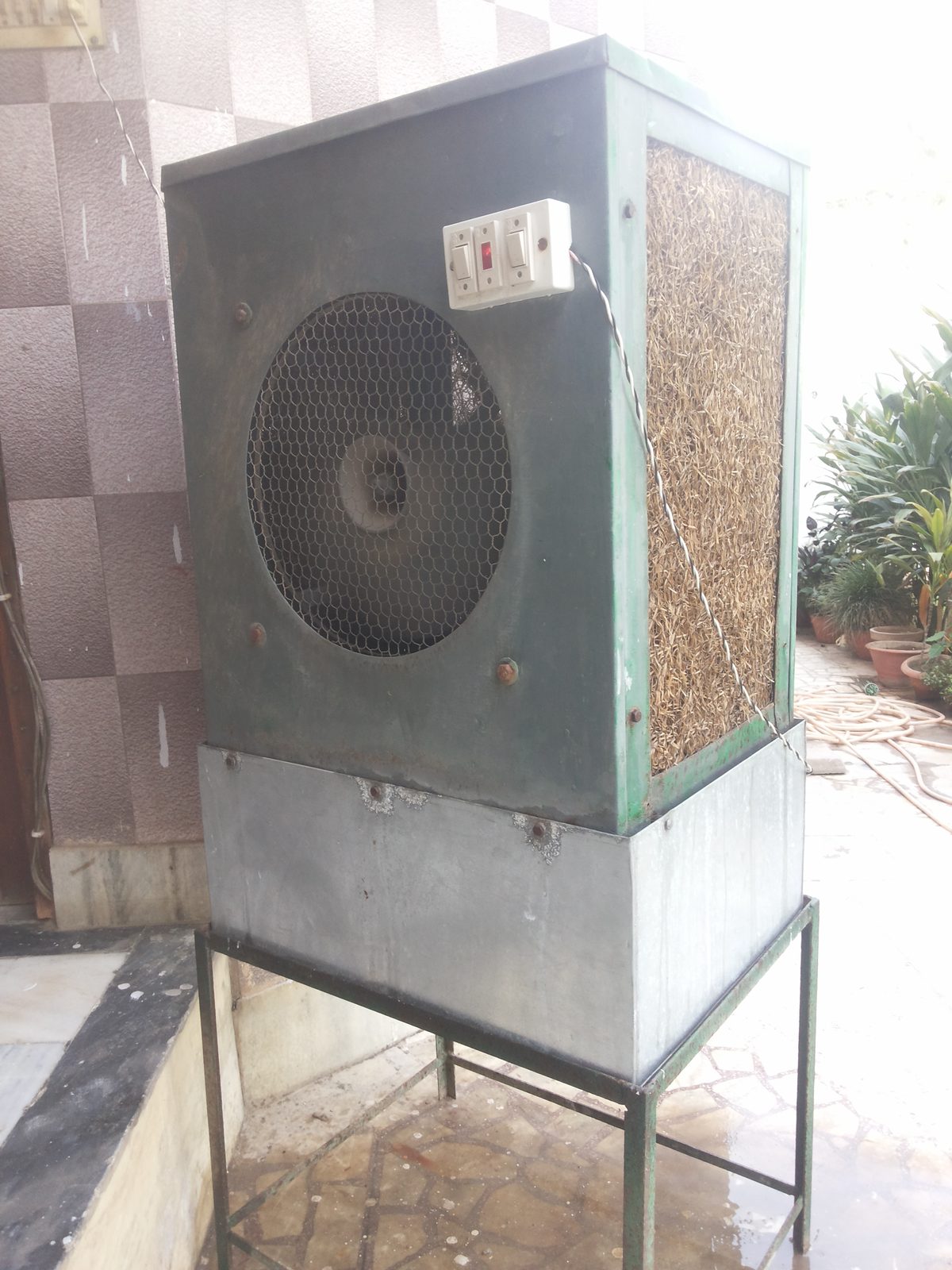
Do you live in a dry climate and want a low cost way to feel cooler without running a full air conditioner? An evaporative air cooler, sometimes called a swamp cooler, may be worth a look. It does not use refrigerant. It cools air by passing it through a wet pad. As water evaporates from the pad, the air gets cooler and a little more humid. That simple idea works well in dry air and poorly in humid air, so knowing your climate is the first step.
This guide explains how evaporative coolers work, the types you will see, when they are a good fit, how to use one correctly, and how to keep it clean and safe.
How Evaporative Cooling Works
Evaporative cooling uses a basic fact about water: when water changes from liquid to vapor, it absorbs heat from the air around it. You feel this when you step out of a shower and feel cool as water evaporates from your skin. An evaporative cooler uses the same effect on a larger scale.
Inside the cooler, a pump lifts water from a tank to the top of a pad made of cellulose, wood fiber, or a similar material. Water trickles down through the pad and keeps it wet. A fan pulls warm outdoor air or room air through the wet pad. As the air passes through, some of the water evaporates, the air cools down, and the fan blows that cooler air into the room.
The cooler air also picks up moisture. That is why the air feels cooler but also a little more humid. In a dry climate, that extra moisture can feel pleasant, especially if the air is very dry and your skin and throat feel dry. In a humid climate, the air is already full of moisture, so little water can evaporate and the air does not cool much. The room can end up feeling warmer and stickier instead of cooler.
Types of Evaporative Coolers
Portable evaporative coolers are the most common type for a home. They are a free standing box on wheels with a water tank, a pad, a fan, and a control panel. You fill the tank with water, plug the unit in, and place it in the room you want to cool. Some models have a remote control, a timer, and a setting for fan speed. Portable coolers are easy to move from room to room, but they only cool the area near the unit and they work best when you are sitting close to the airflow.
Window evaporative coolers mount in a window, similar to a window air conditioner. They pull outdoor air through a wet pad and blow it into the room. They can cool a larger area than a portable unit because they bring in fresh outdoor air. They need a water connection or a tank that you fill, and they need a window that can support the unit.
Whole house evaporative coolers sit on the roof or on the side of the house and connect to ducts that carry cool air to several rooms. They are common in dry regions where homes were built with this type of cooling. A whole house cooler can cool a home for less electricity than a central air conditioner, but it requires ductwork, a water supply, and regular maintenance. A contractor can tell you whether your home is suited to this type.
When an Evaporative Cooler Is a Good Fit
An evaporative cooler is a good fit in a hot, dry climate where the air is low in humidity. In those places, the cooler can drop the air temperature enough to make a room feel comfortable, especially in the afternoon when the air is hottest and driest. It uses less electricity than a refrigerant air conditioner because its main parts are a fan and a small water pump, not a compressor.
It is also a good fit for a garage, a workshop, a patio, or a covered outdoor area where you want a breeze of cooler air but where a sealed air conditioner would not make sense. Because it brings in outdoor air, it can feel fresh in a space that would otherwise be stuffy. It is also a good fit for a person who wants a low cost, portable cooler for a single room and who does not want a permanent install.
An evaporative cooler is a poor fit in a humid climate. If the air already feels sticky, adding more moisture will make it feel worse. It is also a poor fit for a tightly sealed room with no ventilation. The cooler needs a way for air to leave the room, or humidity will build up inside. If you close all windows and doors and run a portable cooler, the room will become humid and the cooling effect will fade.
How to Use One Correctly
Ventilation is the key to using an evaporative cooler well. Open a window or a door slightly on the opposite side of the room from the cooler. That lets warm air escape and lets fresh air flow through. You want a gentle cross breeze, not a sealed room. If the room feels humid, open the window a little wider. If the air feels dry and you want more cooling, close the window a little. You will learn the right opening for your room by feel.
Place the cooler where air can flow freely. For a portable unit, place it near an open window or door so it can pull in fresh air. Do not place it in a corner with the back against a wall. The back needs air to pull through the pad. Sit in the path of the airflow if you want to feel the cooling directly. The cooling effect is strongest close to the unit and fades as you move away.
Fill the tank with clean water. Some people add ice to the tank on very hot days. Ice can make the air feel cooler for a short time, but it melts quickly and the effect does not last long. It is better to keep the pad fully wet and the fan running steadily. Check the water level regularly. A pump running dry can be damaged, and a dry pad does not cool at all.
Use the fan speed to match the need. A higher fan speed moves more air and cools a larger area, but it is louder and uses more water. A lower speed is quieter and works well when you are sitting close to the unit or at night when the air is cooler outside. Try different speeds and see what feels best for your room.
Water, Pads, and Maintenance
Clean water matters. Tap water is fine in most areas, but if your water is very hard, minerals can build up on the pad and in the tank. That buildup can reduce airflow and create a smell. Some coolers have a filter or a treatment to reduce mineral buildup. Follow the maker instructions for your model and for your water type.
Clean the tank regularly. Empty it, rinse it, and wipe it dry when you are not using the cooler for a while. Standing water can grow mold and bacteria and can create an unpleasant smell. Do not leave water sitting in the tank for weeks without use. If the cooler will sit unused, drain it fully and let the pad dry.
Check the pad. A pad that is torn, clogged with mineral scale, or covered in mold should be replaced. The maker will list the pad type and size for your model. A clean pad lets air flow through easily and cools better. A clogged pad blocks airflow and forces the fan to work harder. Replace pads at the start of the cooling season if they look worn or if airflow seems weak.
Clean the fan and the outside of the unit with a damp cloth. Check the power cord for damage before each season. If the cord is frayed or the plug is loose, do not use the unit until it is repaired or replaced. If the pump makes a new noise or stops moving water, turn the unit off and check the tank, the pump filter, and the water line for a blockage.
Health and Safety Tips
Keep the cooler clean to avoid mold and bacteria. That is the most important safety step. A dirty tank or pad can spread odors and can affect indoor air quality. Clean the tank, replace the pad when needed, and do not let water sit stagnant. If you or someone in your home has asthma or a breathing condition, pay extra attention to cleaning and to humidity. Too much indoor humidity can make breathing feel harder.
Do not use an evaporative cooler as your only cooling in very hot weather if you have a health condition that makes heat risky. An evaporative cooler cools less than a refrigerant air conditioner, and on the hottest days it may not keep a room cool enough. If you feel dizzy, nauseous, or unusually tired in the heat, move to a cooler place, drink water, and seek help if symptoms continue.
Keep electrical parts dry. Do not splash water on the control panel or the power cord. Place the unit on a level surface so water does not spill. Keep the unit out of reach of small children who might tip it over or pull on the cord.
Evaporative Cooler Compared With Air Conditioner
An evaporative cooler and a refrigerant air conditioner solve the same problem in different ways. A refrigerant air conditioner cools and dehumidifies sealed indoor air. It works in any climate, including humid ones, and it can cool a room to a low temperature even on the hottest day. It uses more electricity and costs more to buy and install.
An evaporative cooler cools by adding moisture and needs ventilation. It works best in dry air, uses less electricity, and costs less to buy. It cannot cool as much as an air conditioner on a very hot day, and it does not work well in humid weather. It also needs regular water and pad care that an air conditioner does not need.
Some people in dry climates use both. They use an evaporative cooler on warm, dry days and an air conditioner on the hottest or most humid days. Others use an evaporative cooler alone and accept that the hottest afternoons will be warmer than they would be with an air conditioner. Your choice depends on your climate, your budget, and how cool you need your home to be.
Is an Evaporative Cooler Right for You
If you live in a dry climate, want a low cost portable cooler, and can open a window for ventilation, an evaporative cooler may be a good fit. If you live in a humid climate, or you need a room to stay cool and dry on the hottest days, a refrigerant air conditioner will serve you better.
Talk to a contractor or a knowledgeable store staff member in your area. They can tell you how evaporative coolers perform in your local climate and whether a portable, window, or whole house model fits your home. If you buy one, keep it clean, keep the pad wet, ventilate the room, and enjoy the cool breeze on a dry summer afternoon.