What should you know before you rely on a central air conditioning system to cool your home all summer? This central air conditioning system guide walks through the parts, the choices, and the daily habits that shape how well the system works. You do not need to be a technician to use this information. You need a clear picture of what the system does, what size and features matter, and what care keeps it running.
A central system serves the whole home from one setup. One thermostat controls it, one indoor coil cools the air, one blower moves that air, and ducts carry it to every room. The outdoor unit removes the heat. When the parts are matched to the home and maintained, the result is steady cooling in every lived-in room. When the parts are mismatched or neglected, the result is uneven rooms, long run times, and avoidable service calls.
How a Central System Is Put Together
A central system is a loop for refrigerant and a loop for air, working together. The refrigerant loop moves heat. The air loop moves cooled air to the rooms. The thermostat ties the two loops together by deciding when the system should run.
The refrigerant loop has four main stages. Cold liquid refrigerant absorbs heat in the indoor evaporator coil and turns into a gas. The compressor outside squeezes the gas and raises its temperature. The outdoor condenser coil releases that heat into the outdoor air, and the refrigerant turns back into a liquid. An expansion valve lowers the pressure again, so the refrigerant is cold when it re-enters the indoor coil. This cycle repeats while cooling is needed.
The air loop starts at the return vents. The blower pulls warm air from the rooms through return ductwork, across the cold indoor coil, and then through supply ductwork to the supply vents. Moisture from the indoor air condenses on the cold coil and drains away. The air that returns to the rooms is cooler and drier than the air that left them.
Split Systems and Packaged Systems
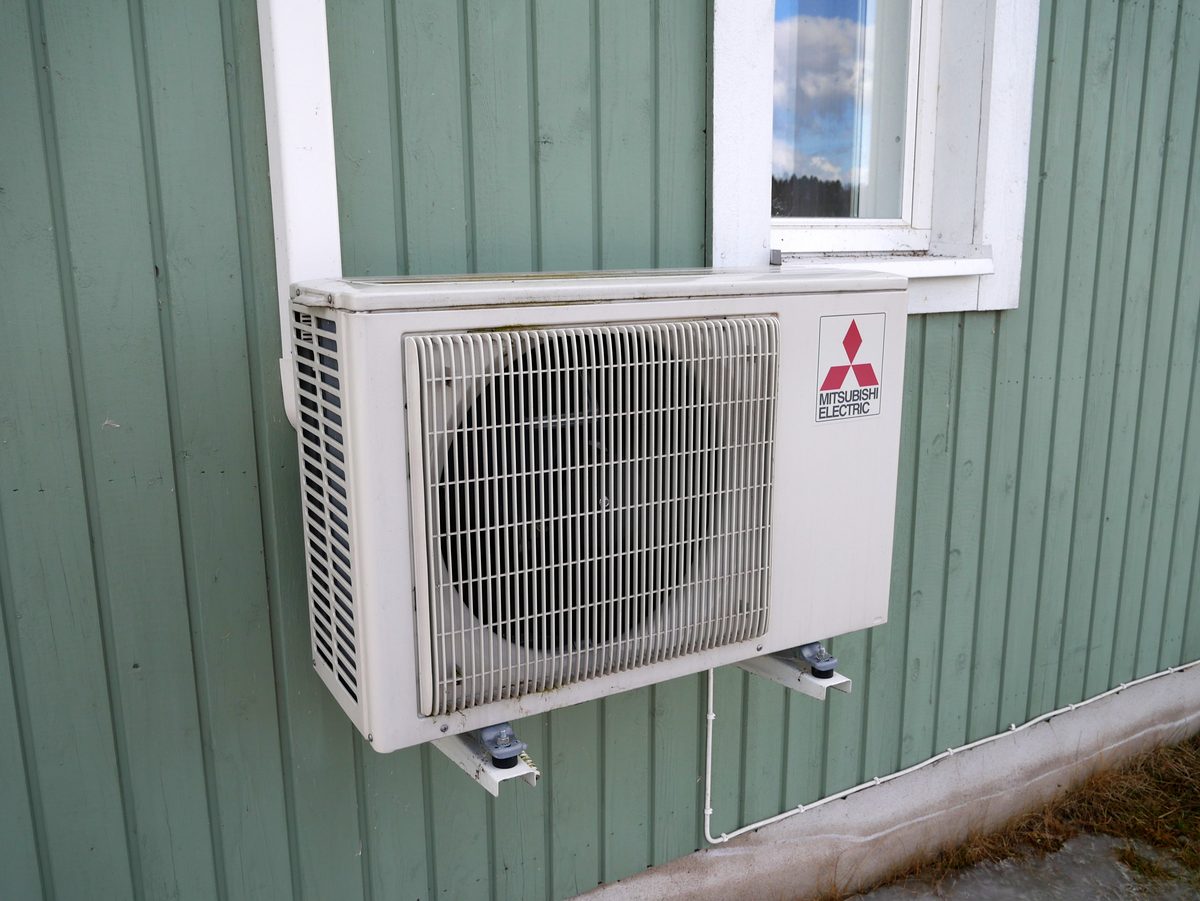
Most homes have a split system. The name means the parts are split between indoors and outdoors. The indoor part holds the evaporator coil and the blower, often paired with a furnace. The outdoor part holds the compressor, the condenser coil, and the fan. Refrigerant lines and wiring connect the two halves through the wall of the home.
Some homes have a packaged system, where the main parts sit together in one large cabinet outside the home, often on a pad or on the roof. Ducts connect that cabinet to the home. Packaged systems are common where indoor space is limited or where a single outdoor cabinet suits the layout. The cooling cycle is the same; only the placement of the parts is different.
Either layout can work well when it is sized and installed correctly. The choice usually depends on the home layout, the space available indoors and outdoors, and whether the home already has a furnace and ductwork that the cooling system can share.
Sizing: Why Bigger Is Not Better
Size is one of the most misunderstood parts of a central system. A larger unit does not always cool better. An oversized system can cool the air quickly and shut off before it has run long enough to remove moisture, leaving the home cool but damp. It can also cycle on and off often, which wears parts and makes temperatures swing from room to room. An undersized system, on the other hand, may run for long hours on hot days and never reach the thermostat setting.
Correct sizing is based on the home, not on a guess or on the size of the old unit alone. A technician should look at the floor area, the ceiling height, the insulation, the windows and their direction, the air leakage, the number of people who live there, and the local climate. Two homes with the same floor area can need different cooling capacity if one has large west-facing windows and poor insulation while the other is shaded and well sealed.
If you are replacing a system, ask how the size was chosen and whether a load calculation was done for your home. A clear answer that names the factors above is a good sign. A vague answer that points only to the old unit size is a reason to ask more questions before you agree to the work.
Efficiency Ratings in Plain Terms
Central air systems carry efficiency ratings that help you compare one model with another. The most common rating for cooling efficiency is the seasonal rating that measures cooling output against energy use across a season. A higher rating means the system can deliver the same cooling with less energy use under the rating test conditions. The rating does not promise a set bill amount, because your home, your climate, and your habits all affect energy use, but it does let you compare models on a common scale.
When you compare ratings, compare like with like. Look at the cooling rating, the heating rating if the system also heats, and the features that affect daily use. A variable speed blower and a compressor that can adjust its speed can hold temperatures steadier and run more quietly than a single speed system. Those features can matter as much as the headline rating, especially in a home where comfort in the farthest rooms is a problem.
Thermostats and Controls
The thermostat is the part you touch most, so its features deserve attention. A basic thermostat lets you set a temperature and a mode. A programmable thermostat lets you set different temperatures for different times of day, so the home can be warmer while you are away and cooler when you return. A smart thermostat can learn your schedule, let you change settings from a phone, and show energy use patterns, but it only helps if you set it up to match your real routine.
Where the thermostat sits matters as much as what it can do. It should be on an interior wall in a room you use often, away from direct sun, drafts, and heat sources. If the thermostat reads the wrong temperature, the whole system follows that wrong reading. If you move furniture, add a heat source, or change how a room is used, check whether the thermostat still sits in a sensible spot.
Ductwork and Airflow
Ductwork decides how well cooled air reaches each room. Supply ducts carry cool air out, return ducts bring warm air back. Both need to be sealed, supported, and sized for the air they carry. Leaks in ducts that run through attics or crawl spaces can lose cooled air and pull in hot air, dust, and moisture from outside the living space. Crushed or sagging flexible ducts can choke airflow to a whole branch of the home.
Airflow problems often show up as one warm room, weak air from a vent, or a system that runs long without cooling evenly. Start with the simple checks: a clean filter, open supply vents, clear return grilles, and no furniture blocking a vent. If the problem stays, a technician can measure airflow at each vent, look for duct leaks or damage, and check whether the blower speed suits the duct layout.
Daily Use That Helps the System
How you use a central system affects both comfort and wear. Set the thermostat to a temperature you can live with, rather than setting it far lower in hopes of faster cooling. The system cools at the same rate either way; a very low setting only makes it run longer. On very hot days, expect longer run times and plan around them, rather than turning the system off and on in short bursts.
Close windows and doors while the system runs, so cooled air stays inside and hot air stays out. Use window coverings on sunny windows during the hottest part of the day. Keep heat sources in mind: cooking, laundry, and many people in one room all add heat that the system must remove. These habits do not replace maintenance, but they reduce the load the system has to carry.
Care Through the Year
Regular care keeps a central system working at its best. Change the filter on a steady schedule, and check it more often in heavy use, during dusty work in the home, or if you have pets. Keep the outdoor unit clear of leaves, grass clippings, and stored items. Keep the area around the indoor unit clear enough for service and airflow. Watch the condensate drain for water where it should not be, and note any new noise, smell, or pattern in how the system cycles.
Arrange a service visit at least once a year, ideally before the cooling season starts. A technician can check the refrigerant, the electrical parts, the blower, the coils, and the drain in ways that are not safe or practical for a homeowner to do. Between visits, your regular checks are the early warning system. A filter changed on time and a clear outdoor unit prevent many of the problems that lead to a service call on the hottest day of the year.
A central air conditioning system is a team of parts: a thermostat that decides, a refrigerant loop that moves heat, a blower and ducts that move air, and an outdoor unit that releases heat outside. Size it for your home, not for a guess. Compare efficiency on a common scale and look at controls and airflow too. Use the thermostat with a steady setting, keep filters clean and vents open, and give the system a yearly check. With that approach, the system can cool the whole home evenly, summer after summer, without demanding your attention every day.