What happens underground when a ground-source heat pump heats your home? The answer is a quiet exchange of heat between a buried pipe and the soil around it, repeated thousands of times a day. No flame, no outdoor fan fighting winter air, just a loop of pipe, a circulating fluid, and a heat pump that moves warmth where it is needed. If you are considering one of these systems, or you already own one, it helps to understand the ground loop in detail, because the loop is what makes the system work.
This article focuses on that loop: how it exchanges heat with the earth, what goes into installing it, and what care it needs over the years. The indoor heat pump matters too, but the loop is the part you cannot see, and the part that decides whether the system performs well.
The Ground as a Heat Source
A few feet below the surface, the earth holds a steady temperature through every season. Summer heat soaks into the soil slowly, and winter cold only reaches the top layers. Below the frost line, the ground stays mild all year, warmer than winter air and cooler than summer air. A ground-source heat pump uses that stable zone as its partner.
The system does not take heat from the ground and leave the soil cold. It borrows a small amount of heat from a large volume of earth, and the soil recharges from surrounding ground and from the sun over time. In summer the flow reverses, and the ground absorbs heat from your home, storing it until winter draws it back out. Over a full year the exchange roughly balances, which is why a properly sized loop keeps working season after season.
Soil type affects how well this works. Moist, dense soil conducts heat better than dry, loose soil, because water in the soil carries heat between grains. Rocky ground can be harder to drill but still conducts well once the pipe is in place. Your installer should account for local soil when sizing the loop, not assume one size fits every yard.
Inside the Ground Loop
The loop itself is a circuit of high-density polyethylene pipe, a tough plastic that resists corrosion and handles ground pressure for decades. The pipe is filled with a water-based fluid, usually water mixed with a food-safe antifreeze that keeps it flowing on the coldest days. A circulator pump pushes that fluid through the loop and back to the heat pump in a continuous circuit.
As the fluid travels through the buried pipe, heat passes through the pipe wall between the fluid and the soil. In winter, the soil is warmer than the fluid, so heat flows into the fluid and the fluid returns to the house carrying that warmth. In summer, the fluid is warmer than the soil, so heat flows out of the fluid and into the ground. The pipe wall is thin enough to let heat through easily, and the long length of buried pipe gives the fluid plenty of time and surface area to exchange heat.
The loop is sealed. The same fluid circulates for years without being used up, and the system includes a fill and purge point so a technician can top up the fluid or remove trapped air. A pressure gauge on the loop tells you the circuit is full and sealed. A slow pressure drop over time can point to a small leak at a fitting, and that is worth checking promptly.
Horizontal, Vertical, and Pond Loops
There are three common ways to lay out a ground loop, and the choice comes down to land, water, and budget.
- Horizontal loop: Pipe runs in trenches a few feet deep across a wide yard. It is the simplest to install and usually the least costly, but it needs a large open area, and the trenches disturb a lot of lawn.
- Vertical loop: Pipe runs down deep boreholes drilled straight into the ground. It needs very little surface area, which suits small lots, but drilling requires specialized equipment and the boreholes must be spaced apart so they do not steal heat from each other.
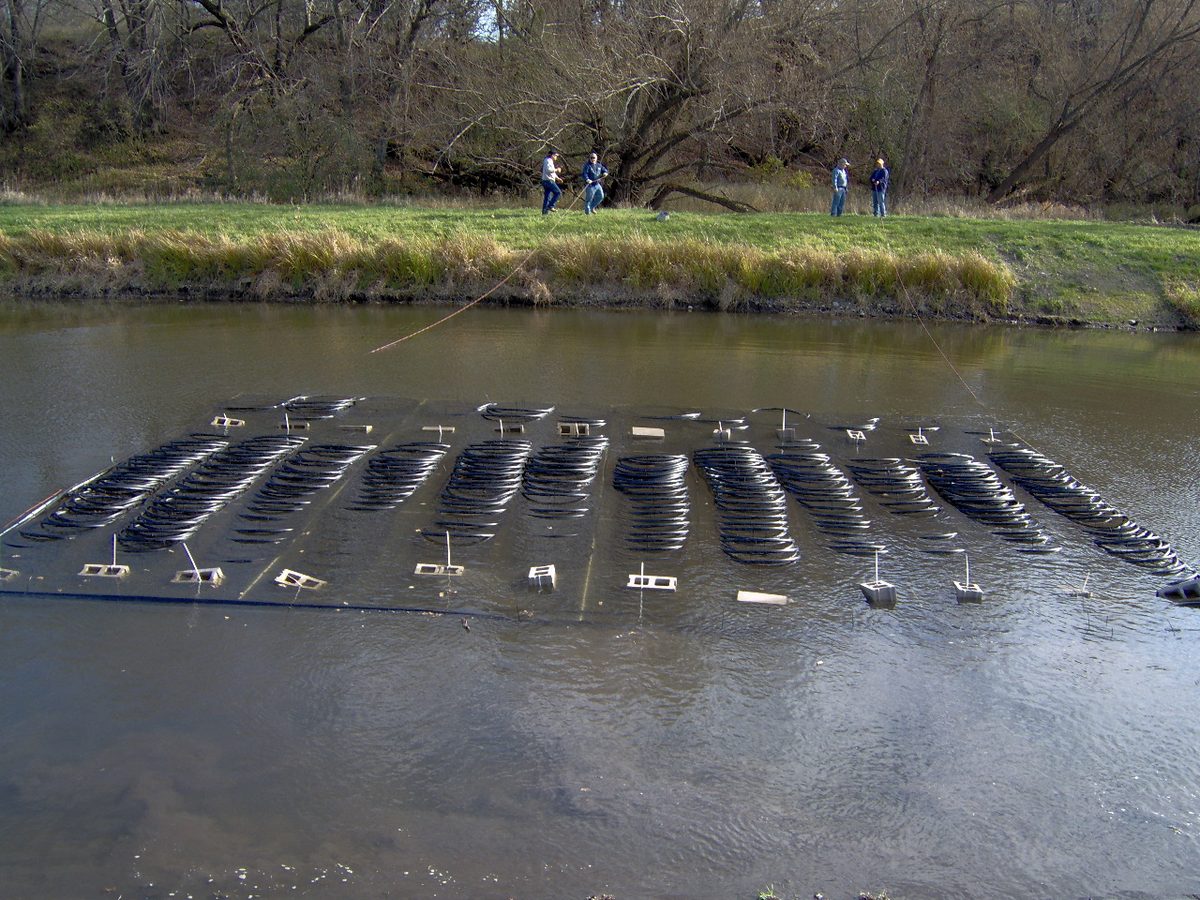
- Pond loop: Coils of pipe rest on the bottom of a pond or lake near the home. Water transfers heat very well, and the install can be simple if a suitable body of water is close by, but the pond must be deep enough and large enough to stay useful through winter.
Your installer should walk the property with you and explain which layout fits. A big flat yard points to horizontal. A small lot or a yard full of trees and patios points to vertical. A pond on the property is worth asking about, but only if it meets the depth and size the system needs.
How the Heat Pump Uses the Loop
The indoor heat pump is where the loop fluid meets the refrigerant cycle that heats and cools your home. In heating mode, loop fluid warmed by the earth flows through a heat exchanger inside the unit. Refrigerant on the other side of that exchanger absorbs the warmth and turns into a gas. A compressor squeezes the gas, raising its temperature further, and the hot gas flows through a second coil where household air picks up the heat and carries it into your ducts.
In cooling mode, the flow reverses. Refrigerant absorbs heat from indoor air, and the compressor moves that heat to the loop fluid. The fluid carries it out to the buried pipe, where the cooler soil takes it away. The fluid returns to the house, and the cycle continues.
The key point is that the heat pump never has to fight extreme outdoor air. The loop fluid always arrives at a moderate temperature, so the compressor works under steady, gentle conditions. That is why the system can hold its performance through a cold snap or a heat wave that would strain an air-source unit.
Installation Considerations
A ground-source install is a construction project, not a simple equipment swap, and the planning stage matters more than with a standard system. It starts with a load calculation for your home: square footage, insulation, windows, and local climate. The loop is sized from that load, the soil type, and the local ground temperature. A loop that is too short will run cold in winter and hot in summer, and the system will lose performance exactly when you need it most.
Next comes the site work. For a horizontal loop, trenches are dug, pipe is laid in, and the trenches are backfilled carefully so the pipe sits in good contact with the soil. For a vertical loop, a drilling rig bores each hole, pipe is lowered in, and the hole is filled with a grout that bonds the pipe to the surrounding earth for good heat transfer. Every joint is fused, not glued, and the whole loop is pressure-tested before it is buried.
Before you approve the work, ask about permits, utility marking, and the loop layout map. Underground utilities must be marked before any digging or drilling. The layout map shows where the pipe runs, so a future fence post, tree, or patio project does not damage it. Ask for that map in writing and keep it with your home records.
Inside the home, the heat pump connects to your ductwork or radiant system, the loop piping is run to the unit, and the system is filled, purged of air, and tested in both modes. A good installer will also set the thermostat and show you how to read the loop pressure gauge.
Maintenance Through the Years
The buried loop needs almost no maintenance. It has no moving parts, sits sealed underground, and is built to last for decades. Your care focuses on the parts you can reach: the indoor heat pump, the circulator pump, and the loop fluid.
Change the air filter on schedule and keep the indoor coils clean, just as you would with any heating and cooling system. Once a year, have a technician check the loop pressure, the fluid level, the circulator pump, and the electrical controls. They should also check the antifreeze strength in the fluid, since it protects the loop on the coldest nights.
Keep the loop layout map safe and mark the loop area in your yard records. If you plan to dig, plant a large tree, or build over the loop field, check the map first and call the installer for advice. The pipe is tough, but a backhoe can damage it, and a repair means digging up the loop.
Signs Something Needs Attention
A ground-source system that cannot hold temperature in extreme weather may have a loop problem, a pump problem, or a low fluid level. A circulator pump that is noisy or runs constantly deserves a check. A loop pressure gauge that keeps dropping points to a leak or air in the system, and the fluid level should be checked by a technician rather than topped up blindly.
Do not ignore a sudden rise in energy use. Because the system runs steadily, a sharp change usually means a component is struggling, not that the weather changed. Early service is cheaper than a failed pump or a frozen loop in midwinter.
A ground-source heat pump is a long-term system. The loop goes in once, the heat pump does the daily work, and the earth underneath does the rest. Size the loop honestly, install it carefully, keep a map of where it runs, and check the fluid and pump once a year. Do that, and the ground under your yard will heat and cool your home for decades.