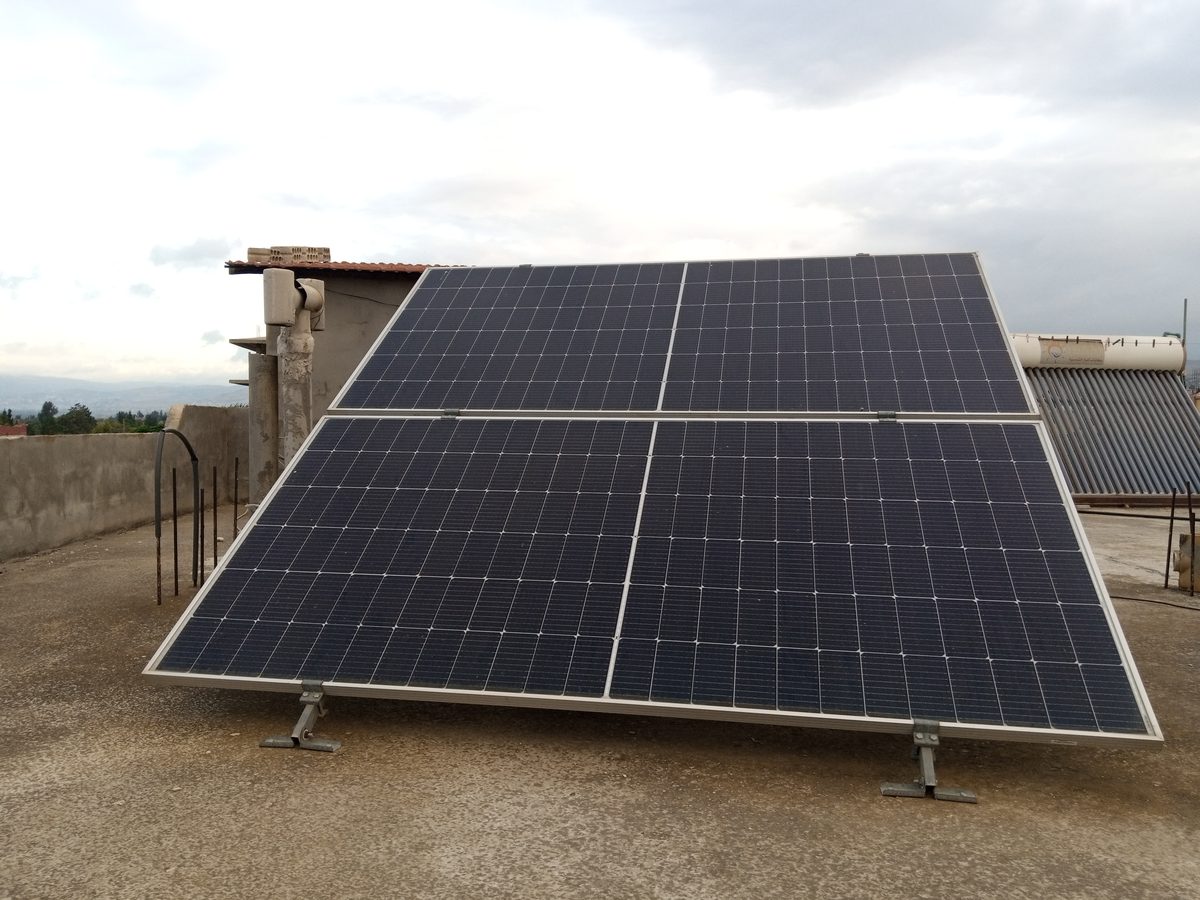
How does a solar air conditioner actually work? It is a fair question, because the sun does not blow cold air. The answer comes in two parts: first, sunlight becomes electricity, and then that electricity runs the same kind of cooling cycle your regular air conditioner uses. Once you see those two steps clearly, the whole system makes sense.
There is also a second, less common way solar energy can cool a building, using heat itself to drive a cooling process. This article explains both, step by step, so you know what is happening inside the panels, the wires, and the air conditioner every time the sun shines.
Step One: Sunlight Becomes Electricity
It starts on the roof with a solar panel. A panel is made of many small solar cells, usually silicon, layered between glass and a backing sheet. When sunlight strikes a cell, it knocks electrons loose inside the silicon. The cell is built with layers that push those freed electrons in one direction, and that steady flow of electrons is direct current electricity.
One cell makes only a small amount of power, so cells are wired together into a panel, and panels are wired together into an array. The bigger the array and the stronger the sunlight, the more electricity flows. On a bright summer afternoon, when your cooling need is highest, the array is also producing at its peak. That timing is why solar and air conditioning pair so well.
Clouds, shade, and the angle of the sun all change how much power the array makes. A passing cloud can cut output for a few minutes, and a tree that shades part of the roof in the afternoon will cut it for hours. This is why installers study shade patterns before they place panels, and why a clear, sun-facing roof matters so much.
Step Two: From Direct Current to Home Power
The electricity from your panels is direct current, which flows in one direction. Your home and your air conditioner use alternating current, which changes direction many times a second. An inverter sits between the panels and your home and converts one to the other.
Most homes use a central inverter that handles the whole array, while some systems use small microinverters mounted behind each panel. Either way, the job is the same: turn panel power into home power, match the voltage your home expects, and shut the system down safely if the grid goes out.
After the inverter, the power flows into your home electrical panel. From there it goes wherever it is needed, including to your air conditioner. Your home does not know or care whether the power came from the sun or the grid. If the panels make more than the home uses, the extra can flow out to the grid where that is allowed. If they make less, the home draws the difference from the grid without any interruption.
Step Three: The Cooling Cycle
Once power reaches the air conditioner, the cooling itself works like any standard system. It does not make cold air from nothing. It moves heat from inside your home to the outside, using refrigerant as the carrier.
Warm air from your rooms is drawn into the unit and passes over the evaporator coil. Refrigerant inside that coil absorbs heat from the air, and the now-cooler air is blown back into your rooms through the ducts or from a wall unit. The refrigerant, carrying the heat it picked up, flows to the compressor, which squeezes it and raises its temperature further.
Next the hot refrigerant passes through the condenser coil outside, where a fan blows outdoor air across the coil and releases the heat into the open air. The refrigerant cools, flows back to the evaporator coil, and the cycle starts again. Your thermostat watches the room temperature and tells the compressor when to run and when to rest. The sun supplies the power, but this refrigerant loop does the actual cooling.
Direct Solar Air Conditioners
Some air conditioners are built to skip the inverter and take solar power directly. These are often ductless mini splits designed for a single room. Solar panels wire straight into the unit, and the unit runs its compressor on that direct current power while the sun is up.
When sunlight is strong, the unit runs on solar power alone. When clouds pass or the sun gets low, the unit blends in grid power to keep running smoothly. At night it runs on grid power like a normal mini split. A controller inside the unit manages the switch between sources so the room temperature stays steady and you never notice the change.
This direct design has fewer parts, since there is no separate inverter for the air conditioner, and it can be a good fit for a single room, a workshop, or a cabin. Its limit is scale: one direct solar unit cools one space, and it still needs a grid connection or a battery for cloudy stretches and night use.
Thermal Solar Cooling
There is a second way to cool with the sun that uses heat, not electricity. A thermal solar cooling system uses solar collectors to heat water, and that hot water drives an absorption chiller. Inside the chiller, heat causes a refrigerant to separate from a liquid, and that separation creates a cooling effect that chills water for the building.
It sounds backwards, using heat to make cold, but the process is real and has been used in large commercial buildings. The chilled water runs through coils in an air handler, and a fan blows building air across those coils to cool the rooms. The system still needs pumps, controls, and a backup heat source for cloudy days, and it is far more complex than a panel-powered air conditioner.
For a home, thermal solar cooling is rarely practical. The equipment is large, the design is specialized, and the cost is high. For most readers, the panel-powered air conditioner is the system that matters, and that is where the rest of this article focuses.
What Happens Through the Day
Picture a hot summer day with a panel-powered central air conditioner. In the morning, the panels wake up as the sun rises and start making power. The house is still cool from the night, so the air conditioner runs lightly and the panels may cover the whole load.
By early afternoon, the sun is strong and the panels are near their peak. The house is warming up, the air conditioner is working hard, and the solar power is covering much of that demand. This is the sweet spot of the system: the hottest hours are also the most productive hours for the panels.
As evening comes, panel output falls while the house still holds heat. The air conditioner draws more from the grid. After dark, the panels stop and the grid takes over fully. A battery can shift some daytime solar power into the evening, but without one, the pattern is simple: sun by day, grid by night, and the two hand off smoothly at the edges.
What Happens on a Cloudy Day
Clouds do not stop a solar air conditioner. Panels still produce power under cloud cover, just less of it. A light overcast may cut output noticeably, while a heavy storm sky cuts it a lot more. Your air conditioner keeps running either way, because the grid fills the gap the moment panel output drops.
You may notice the change on your power bill rather than in your comfort. On sunny days, grid use drops during the afternoon. On cloudy days, it stays closer to normal. Over a whole summer, the sunny days do the heavy lifting, and the cloudy days simply contribute less.
Parts That Need Care
A solar air conditioner has two halves to maintain. On the solar side, keep the panels clean and free of shade. Dust, leaves, and bird droppings cut output, and a gentle rinse a few times a year is usually enough. Check the inverter display or app now and then. A sudden drop in daily production is a sign to look for a fault, a tripped breaker, or heavy soiling.
On the cooling side, the care is the same as any air conditioner. Change the filter on schedule, keep vents open and unblocked, and book a yearly tune-up so a technician can check refrigerant, clean the coils, and test the controls. A clean filter and sealed ducts matter even more here, because every bit of wasted cold air is solar power thrown away.
So, how does a solar air conditioner work? Sunlight frees electrons in a panel, an inverter turns that power into home power, and a standard refrigerant cycle moves heat out of your home. The sun handles the energy, the air conditioner handles the cooling, and the grid stands by for clouds and night. Understand those three pieces and you understand the system.