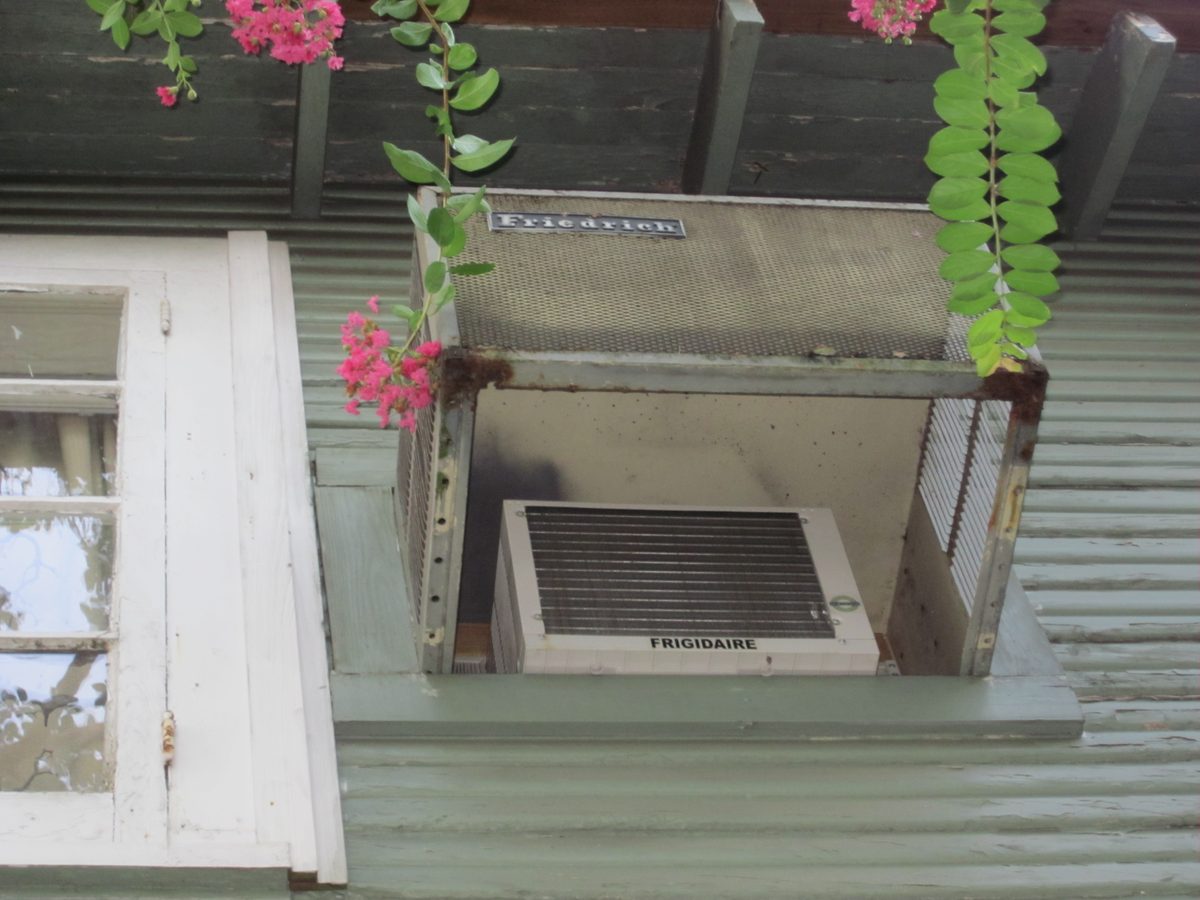
What cools a bedroom on a hot night without any work on the walls? A window air conditioner, such as this 12,000 BTU model with a remote control, slides into a window frame and starts working the same day. This guide explains how this type of unit works, what size room it suits, how to install it well, and how to keep it running for years.
What a Window Air Conditioner Is
A window air conditioner is a self-contained cooling unit that mounts in a window opening. The front of the unit sits inside the room and blows cool air into it. The back of the unit sticks out of the window and releases heat to the outdoor air. Everything the unit needs is in one box: the compressor, the coils, the fans, the controls, and the filter. You plug it in, set the temperature, and it cools the room. There is no outdoor unit to place, no refrigerant lines to run, and no ductwork. That simplicity is the reason window units remain the most common way to cool a single room.
At 12,000 BTU, this unit sits in the middle of the range for room coolers. A BTU, short for British Thermal Unit, is a measure of how much heat the unit can shift in one hour. A cooler of this capacity commonly fits a bigger bedroom, a living room, or the main living area of a small apartment. It is larger than the compact units built for one bedroom and smaller than the heavy units built for a wide open living space. The remote lets you adjust the temperature, the fan speed, and the mode from across the room, which helps when the unit sits in a window behind a bed or a sofa.
Most window units also pull moisture out of the air as they cool, which is a big part of why a cooled room feels comfortable. The moisture collects on the cold indoor coil, drips into a pan, and drains outside through the back of the unit. On a humid day the unit may remove a noticeable amount of water from the room air, and that is normal. The fan-only mode circulates air without cooling, which is useful on mild evenings when you want air movement but not cold air. Some window units also offer a dry mode that runs mainly to reduce humidity.
Is 12,000 BTU the Right Size for Your Room
Picking the right size beats any feature on the box. A cooler that is too small will run without rest and still miss the temperature you want on the hottest afternoons. A cooler that is far too big will drop the room temperature so quickly that it stops before it has dried the air, leaving the room cool yet sticky, and it will switch on and off too often. Shops and installers often begin with a rough sizing shortcut that ties capacity to floor area, then correct it for the particulars of the room. That shortcut is only a first estimate, and the details of your room change the result.
As a broad guide, a 12,000 BTU cooler commonly fits a medium room with standard ceilings and ordinary insulation, such as a bigger bedroom or a modest living room. A room with glass facing west, a room under a roof baked by the sun, a room with thin insulation, and a room shared by several people or heat-giving appliances all need more capacity than a shaded room with good insulation and the same floor area. Window count and direction, ceiling height, and your local climate all move the answer. A tall ceiling holds more air, so it needs more cooling than a room of the same floor area with a standard ceiling.
Weigh up how the room is lived in day to day. A bedroom that only wants cooling once the sun has gone down is a different task from a living room where the family sits together in the afternoon sun. A home office with a computer and a monitor adds warmth that a bedroom does not. A kitchen adds far more heat than either, which is why a window cooler sized for a bedroom will struggle in a kitchen of the same size. Share with the retailer or the installer how the room is lived in, which hours it is in use, and which temperature feels right to you. Those details carry more weight in the sizing advice than any figure printed in a catalog.
Installing a Window Unit Well
Installing a window unit is a job most homeowners can do with a helper, because the unit is heavy and awkward to hold in place while it is secured. Start by measuring the window opening and checking that the unit fits. Most window units are made for double-hung windows that slide up and down, and they come with side panels that fill the gaps on either side. If your window is a casement window that swings open or a sliding window that moves sideways, a standard window unit may not fit, and you may need a different type of unit or a different window.
The unit must tilt very slightly toward the outside so that condensation drains out rather than into the room. Most units have a built-in slope when they sit level in the window, but check the instructions for your model. The unit must be secured so it cannot fall out of the window, and the window sash must be locked or screwed in place above it. Use the mounting hardware that comes with the unit, including the brackets that support it from outside, because a 12,000 BTU unit is heavy and the window sash alone is not enough to hold it safely. If the unit sits above a walkway or a patio, the support brackets matter even more.
Sealing the gaps around the unit is the step most people rush, and it is the step that matters most for comfort. Warm outdoor air leaking in around a poorly sealed unit makes the unit work harder and wastes the cool air it produces. Use the foam strips and side panels that come with the unit, and add weatherstripping or a foam seal where gaps remain. Check the seal from outside as well as inside. If you can see daylight around the unit, outdoor air is getting in. A well-sealed installation also keeps out rain, dust, and insects, and it keeps the unit from rattling in the wind.
The electrical connection deserves care too. A 12,000 BTU window unit draws a real amount of current, and it should plug directly into a wall outlet on a circuit that can carry it. Do not use a long extension cord, and do not share the outlet with other large appliances. If the outlet is old, loose, or warm to the touch, have an electrician look at it before you run the unit. If the breaker trips repeatedly, that is a sign of an electrical problem, not a reason to fit a larger breaker. Some larger window units need a different outlet type, so check the plug on the unit against your outlet before you buy.
Using the Remote and the Controls
The remote is more than a nice extra. It lets you adjust the temperature, the fan speed, and the mode without leaving your chair, and it usually offers a timer and a sleep setting. The timer can start the unit before you arrive home or stop it after you have fallen asleep. The sleep setting lifts the target temperature a little at a time through the night, which trims energy use and keeps the room easy to sleep in. Get to know these settings before the first hot night, because working them out in the dark is no fun at all.
Most window units also have controls on the front panel, so the unit still works if the remote is lost or the batteries die. Keep a spare set of batteries for the remote, and keep the remote in a consistent place, such as on the nightstand. If the unit has an energy-saver mode, that mode switches the fan off when the compressor cycles off, which saves energy but means the fan stops and starts with the compressor. Some people find that distracting at night, so try it and see what you prefer. The fan speed setting matters too: a higher fan speed cools the room faster and moves more air, while a lower fan speed is quieter and pulls more moisture out of the air.
Maintenance and Care
Upkeep for a window unit is light and steady. Behind the front grille sits a filter that catches dust before it can settle on the coil. Rinse it every few weeks during the months the unit runs hard, and more often when pets or heavy dust are part of the household. When a filter is choked with dirt, the coil gets too little air, the unit strains, and ice can form on the coil. The routine is plain: open the front panel, take the filter out, wash it, let it dry right through, and slide it back. Never run the unit without its filter in place, and never fit one that is still damp, because trapped wetness can bring smells.
Once a year, clean the coils. The indoor coil sits behind the filter, and the outdoor coil sits on the back of the unit. Dust and dirt on the coils act like insulation and keep the unit from moving heat well. With the power off, vacuum the coils gently with a brush attachment, and wipe the front grille and the drain area. If the unit has a drain hole at the back, make sure it is clear so condensation can drip out. If water drips inside the room, the unit may not be tilted correctly, or the drain may be blocked, and both are worth fixing promptly.
At the end of the cooling season, decide whether to remove the unit or leave it in the window. Removing it lets you close and lock the window, keeps cold air out in winter, and protects the unit from weather. If you remove it, clean it, let it dry fully, and store it upright in a dry place. If you leave it in the window, cover the outside of the unit with a cover made for window units, and seal the gaps around it so cold air does not leak in. Do not cover the unit with plastic sheeting that traps moisture against it. Either way, unplug the unit when it will not be used for months.
Questions to Ask Before You Buy
Ask the retailer whether the unit fits your window type and your window opening, and whether the mounting hardware and side panels are included. Ask whether the plug matches your outlet, and whether the unit needs a dedicated circuit. Ask about the noise level on the low fan setting, especially if the unit will sit in a bedroom. Ask what the warranty covers and for how long, and who handles a warranty claim. Ask how the filter is removed and cleaned, and whether replacement filters are available.
Ask about the controls as well. Some window units offer a timer, a sleep function, and an energy-saver mode, and some offer a remote with a temperature sensor that lets the unit cool to the temperature where you are sitting rather than the temperature at the unit. Those features are optional, but if you want them, it is cheaper to choose a unit that has them than to wish for them later. Ask for the energy efficiency information for the unit so you can compare running costs between models. Finally, ask about delivery and installation help, because a 12,000 BTU unit is heavy, and carrying it up a flight of stairs alone is a bad idea.