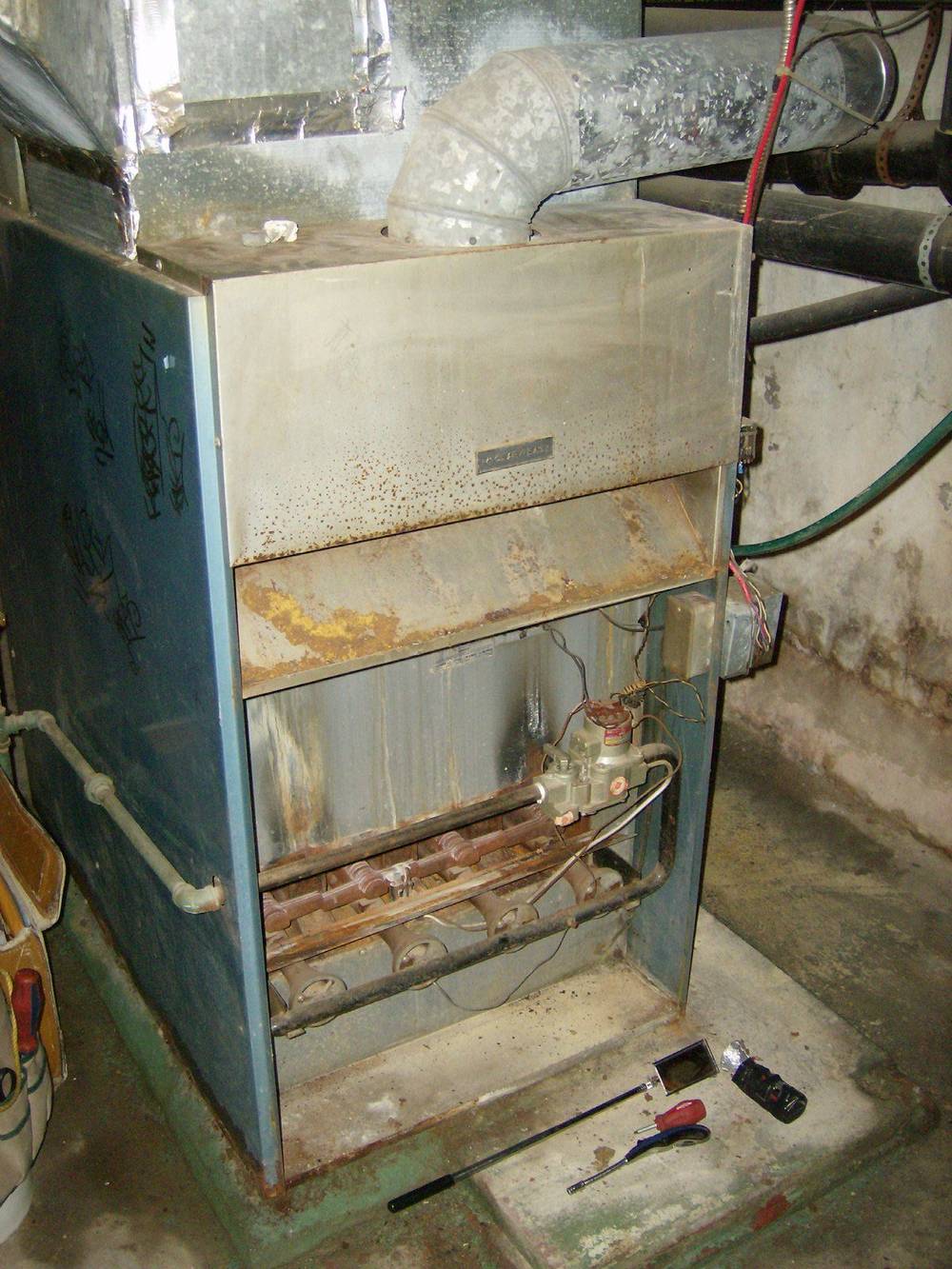
Is your old furnace limping through winter, or are you planning a new heating system and trying to make sense of the model names? A 4-ton Goodman gas furnace, model GMH80604BX, is one of the options a contractor might put on a quote, and the label alone does not tell you whether it suits your house. This guide walks through how a gas furnace works, what the tonnage figure means, and how to size and install one without guessing.
What a Gas Furnace Does
A gas furnace is the heart of a forced-air heating system. It burns natural gas or propane to create heat, then a blower pushes that heated air through ductwork to the rooms of your home. Cool air returns to the furnace through return vents, gets reheated, and the cycle repeats until the thermostat is satisfied. The furnace itself sits in a basement, closet, attic, or utility room, and it works together with the thermostat, the ductwork, and the venting that carries combustion gases outside.
Most homes with a gas furnace also have a cooling coil or an air conditioner sharing the same blower and ducts. That is why furnace tonnage is often talked about alongside air conditioning: the furnace blower has to move enough air for both heating and cooling. The furnace does not cool anything itself. It simply provides the cabinet, the burner, the heat exchanger, and the blower that the rest of the system relies on.
How a Gas Furnace Heats Your Home
The heating cycle starts when the thermostat calls for heat. The gas valve opens, the burners light, and the flame heats a metal heat exchanger. Air from the house blows across the outside of that heat exchanger, picks up heat, and travels through the supply ducts. The combustion gases stay inside the heat exchanger and leave the house through the flue or vent pipe. This separation matters: the air you breathe never mixes with the exhaust.
Several parts have to work together for that cycle to be safe. The inducer fan, on furnaces that have one, clears the flue before the burners light. The flame sensor watches for a steady flame and shuts the gas off if the flame goes out. The limit switch watches the temperature inside the furnace and stops the burners if the unit gets too hot. A modern furnace also has a control board that runs through a start-up sequence and locks the furnace out after repeated failed starts, so a problem gets attention instead of being ignored.
When the thermostat is satisfied, the burners shut off and the blower keeps running for a short while. That cool-down run pushes the last of the heat out of the heat exchanger and into the house instead of letting it sit inside the cabinet. It also protects the heat exchanger from the stress of repeated hot and cold swings.
What the 4-Ton Figure Means
On a gas furnace, the tonnage figure usually describes the blower capacity, meaning how much air the furnace can move. A 4-ton blower is sized to move enough air for a 4-ton air conditioner or heat pump paired with the furnace. It does not mean the furnace produces four tons of heat. Furnace heating output is measured in British thermal units, and the model name alone does not state that output, so ask the contractor for the heating input and output ratings from the product data sheet before you compare quotes.
This matters because the furnace and the cooling equipment have to match. If the blower is too small for the air conditioner, cooling suffers and the coil can freeze. If the blower is much larger than needed, it can push air through the ducts too fast, which makes the system noisy and can leave some rooms uncomfortable. A contractor who sizes the system looks at both the heating load and the cooling load, then picks equipment where the blower, the coil, and the outdoor unit all line up.
Why Bigger Is Not Better
It is tempting to buy a larger furnace for extra warmth, but an oversized furnace usually makes a home less comfortable. It heats the house in short bursts, shuts off, and starts again a few minutes later. That short cycling wears out parts faster, and the rooms near the thermostat can feel warm while far rooms stay cool. The furnace also spends less time running at a steady state, which is when it runs most smoothly.
An undersized furnace has the opposite problem: on the coldest nights it may run all the time and still fall short of the thermostat setting. The right size is the one that matches the heat loss of your house on a cold day, with a small margin. The standard way to find that number is a room-by-room load calculation, often called a Manual J, which accounts for square footage, insulation, windows, air leakage, and your local climate. A contractor who sizes by square footage alone, or by copying the size of the old furnace, is guessing. Ask whether a load calculation was done and ask to see the result.
Ductwork matters just as much as the furnace itself. A correctly sized furnace connected to undersized or leaky ducts cannot deliver its heat to the rooms. Before a new furnace goes in, ask the contractor to check the duct sizing, the return air capacity, and whether any ducts run through unconditioned space. Fixing duct problems at the same time as the furnace swap is usually cheaper than coming back later.
Installation Notes
Furnace installation is not a do-it-yourself job. Gas lines, venting, and electrical connections all have code requirements, and a mistake can be dangerous. A licensed contractor should handle the gas connection, the venting, and the start-up checks, and most areas require a permit and an inspection for a furnace replacement. Keep the permit paperwork and the inspection record with your house files.
Before installation day, clear the area around the old furnace and make sure the installer has a path to move equipment in and out. Ask where the new furnace will vent and where the condensate drain will go if the unit produces condensate. Ask whether the existing gas line is large enough for the new furnace and whether the flue needs to be resized or replaced. If the old furnace vented into a shared chimney with a water heater, the chimney may need a liner or a different arrangement once the furnace is gone, so raise that question before work starts.
After installation, the contractor should run the furnace through a full heating cycle, check the temperature rise across the heat exchanger, and confirm the gas pressure and the burner operation. Ask for those readings and keep them with the warranty paperwork. A proper start-up check catches installation problems while the installer is still on site.
Keeping a Gas Furnace Running Well
Routine care is simple but easy to skip. Change the air filter on the schedule the furnace manual gives, and check it monthly during the heating season. A clogged filter restricts airflow, which can overheat the heat exchanger and shorten the life of the furnace. Keep the area around the furnace clear of stored boxes, paint, and chemicals, and keep the vents and returns in the house open and unblocked by furniture or rugs.
Have the furnace serviced once a year, ideally before the heating season starts. A service visit usually covers cleaning the burners, checking the flame sensor, inspecting the heat exchanger, testing the safety controls, and confirming the venting is clear. If the furnace is older, ask the technician to look closely at the heat exchanger for cracks or rust, since a damaged heat exchanger is a serious safety issue.
Every home with a gas furnace should have working carbon monoxide detectors. Put one on each level of the house and near the sleeping areas, test them monthly, and replace them on the schedule the maker gives. If a detector sounds, leave the house and call the gas company or the fire department from outside. Do not try to find the source yourself.
Questions to Ask a Contractor
Before you sign a quote, ask these questions and write down the answers. Was a load calculation done for my house, and what size did it call for? What are the heating input and output ratings of the furnace you are quoting? Will the existing ductwork handle the airflow, and what changes do you suggest? How will the furnace be vented, and does the chimney or flue need work? What is included in the price, and what would cost extra? What warranty covers the parts, the heat exchanger, and the labor, and who handles warranty claims?
Also ask how long the installation will take, whether a permit and inspection are included, and what the contractor will do with the old furnace. A clear written quote that answers those questions is worth more than a low number on a vague estimate. The GMH80604BX is a 4-ton Goodman gas furnace, and whether it fits your home depends on the load calculation, the ductwork, and the cooling equipment it will be paired with, so let those facts drive the decision.