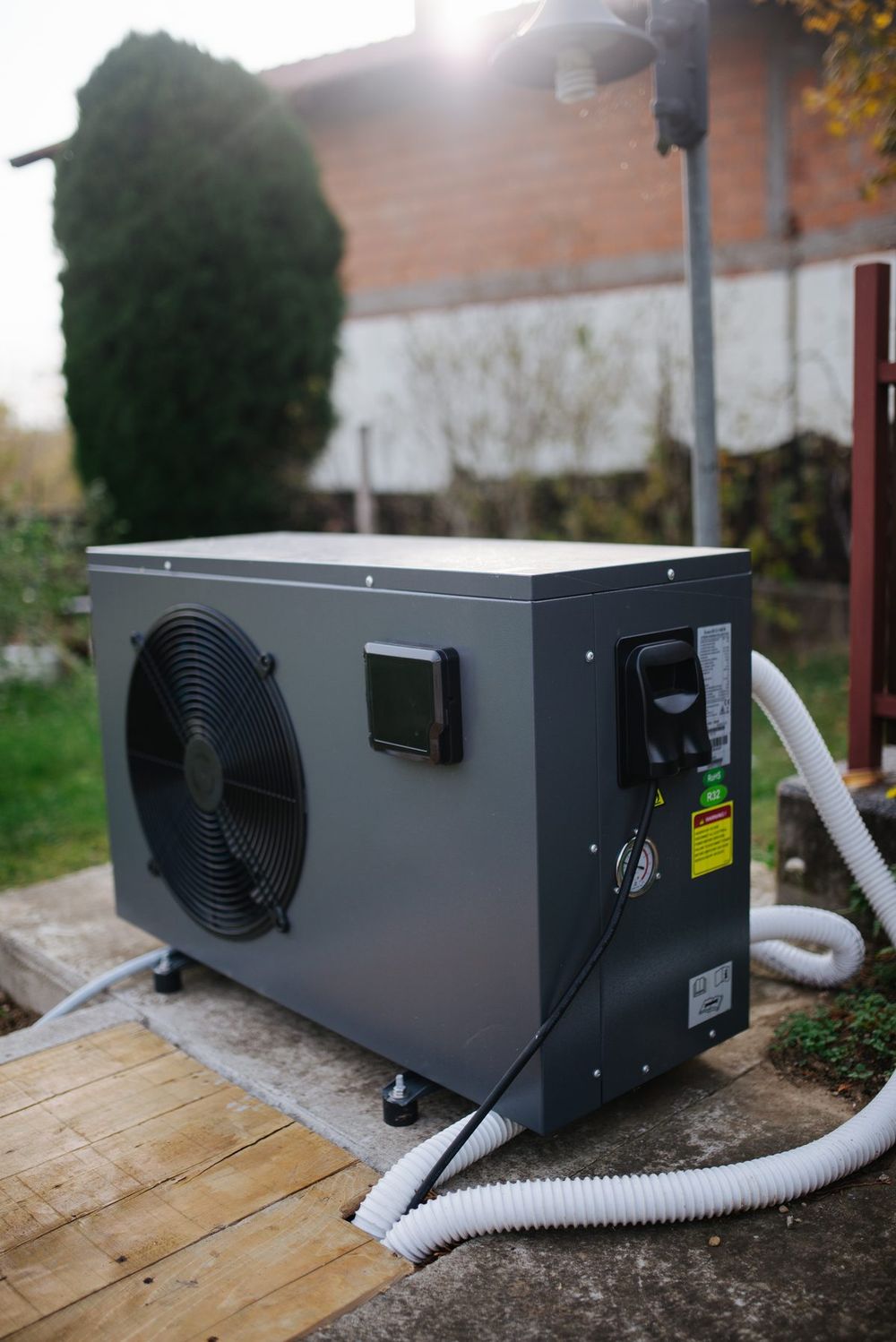
Do you need one unit that can both heat and cool a large home, with no indoor furnace or air handler taking up closet space? A 5-ton Goodman packaged heat pump, model GPH1460H41, is built for that job: the whole system sits in a single outdoor cabinet and connects to the house through ductwork. This guide explains how a packaged heat pump works, what the size figure means, and what to check before installation.
What a Packaged Heat Pump Is
A packaged heat pump puts the compressor, the coils, the blower, and the controls into one cabinet that sits outside the house, usually on a concrete pad or a rooftop curb. Ductwork runs from the cabinet into the house, carrying conditioned air in and returning room air for another pass. There is no separate indoor unit, which frees up indoor space and puts all of the serviceable parts in one place.
That single-cabinet layout suits homes with limited indoor space, slab foundations, and flat or low-slope roofs. It also suits replacements where the old system was already a packaged unit and the ductwork and pad are in place. The trade-off is exposure: every part of the system lives outdoors, so the cabinet, the coils, and the electrical connections have to stand up to rain, sun, and temperature swings, and the ductwork that connects the unit to the house has to be sealed and insulated well.
How a Heat Pump Heats and Cools
A heat pump moves heat rather than making it. In cooling mode, it picks up heat from the indoor air and releases it outdoors, just like an air conditioner. In heating mode, it reverses: it picks up heat from the outdoor air and releases it indoors. Even cold outdoor air holds heat energy, and the heat pump can gather it, though the output falls as the outdoor temperature drops and a backup heat source may be needed on the coldest days.
The reversing valve is the part that switches the system between heating and cooling, and the defrost cycle is what keeps the outdoor coil clear of frost in winter. When frost builds up, the unit briefly reverses to melt it, then returns to heating. A short puff of cool air during defrost is normal on many systems. The thermostat controls the switchover, and on a packaged unit the thermostat wiring runs from the house to the outdoor cabinet.
What the 5-Ton Size Means
On a heat pump, the tonnage figure describes the cooling capacity, and the same size figure guides the heating capacity. A 5-ton unit is a large residential size, suited to a large home or a home with high cooling loads. It does not mean the unit weighs five tons. It means the system is rated to move a large amount of heat, and the right size depends on the house, not on the label.
Getting the size right starts with a load calculation. A contractor should measure the house, check the insulation and the windows, account for air leakage, and factor in the local climate before recommending a size. A unit that is too large will cool the house in short bursts, shut off, and start again, which leaves the air feeling clammy and wears out the compressor. A unit that is too small will run all the time on the hottest days and still fall short. Ask for the load calculation and ask how the 5-ton figure matches it.
Ductwork is part of the sizing question too. A 5-ton system moves a lot of air, and the ducts have to be large enough to carry it without noise or pressure problems. If the ducts are undersized or leaky, the new unit cannot deliver its capacity to the rooms. Ask the contractor to check the duct sizing, the return air path, and the condition of the duct connections at the unit before the installation is scheduled.
Understanding Efficiency Ratings in General
Heat pumps and air conditioners carry efficiency ratings that help buyers compare models, and the most common one for cooling is SEER, which stands for Seasonal Energy Efficiency Ratio. In general terms, SEER measures how much cooling a system delivers over a season for each unit of electricity it uses, so a higher SEER means the system uses less electricity for the same amount of cooling. Heating efficiency has its own rating, often called HSPF, which works the same way for the heating season.
Use those ratings to compare models on a like-for-like basis, and ask the contractor for the rated figures from the product data for the exact combination being quoted, since the rating can change with the indoor coil and the duct setup. Do not judge a system by a single number in a listing title. The real running cost depends on the rating, the size match, the ductwork, the thermostat settings, and the climate, so a well-installed unit with a moderate rating can cost less to run than a high-rated unit that is oversized or connected to leaky ducts.
Installation Notes for a Packaged Unit
Installation starts with the pad or the curb. The unit needs a level, stable base that keeps it above standing water and leaves clearance around the cabinet for airflow and service access. The duct connections have to be sealed where they meet the unit, and the supply and return ducts need insulation where they run through unconditioned space. The electrical supply needs a disconnect switch within sight of the unit and a breaker sized for the system, including any backup heat.
On installation day, the crew will set the unit, connect the ducts, wire the thermostat and the power, and check the refrigerant charge and the airflow. Ask them to run the system in both heating and cooling modes and to record the temperature change across the coil and the airflow readings. Those numbers confirm the installation is working as designed. Ask where the condensate drain goes and confirm it drains away from the house, since a packaged unit can produce a steady flow of condensate in humid weather.
Permits and inspections apply to most heat pump installations. Confirm that the contractor will pull the permit and schedule the inspection, and keep the paperwork with the warranty. If the old unit is being replaced, ask how it will be removed and whether the refrigerant will be recovered properly, since venting refrigerant is against the law.
Keeping a Packaged Heat Pump Running Well
Most of the maintenance is simple. Change or clean the air filter on the schedule the manual gives, and check it monthly during heavy use. Keep the area around the outdoor cabinet clear of plants, leaves, and stored items so air can move freely through the coil. Hose the outdoor coil gently from the inside out if it collects dust or pollen, and straighten any bent fins with a fin comb if the manual allows it.
Have the system serviced once a year by a qualified technician. A service visit usually covers checking the refrigerant charge, testing the defrost cycle, inspecting the electrical connections, cleaning the indoor coil and the drain, and confirming the airflow. If the system starts short cycling, makes new noises, or cannot hold the thermostat setting, call for service rather than letting it run, since a small problem with a heat pump can turn into a compressor failure.
Questions to Ask a Contractor
Before you sign, ask the questions that separate a good installation from a rushed one. Was a load calculation done, and what size did it call for? What are the rated cooling and heating efficiency figures for the exact combination you are quoting? Is the existing ductwork sized for a 5-ton system, and what changes do you suggest? What backup heat is included for the coldest days, and how is it controlled? What is included in the price, what would cost extra, and what warranties cover the compressor, the parts, and the labor?
A 5-ton Goodman packaged heat pump, model GPH1460H41, is a large, single-cabinet system, and it will serve a large home well when it is sized by a load calculation, installed on a sound base with sealed ducts, and maintained each year. Let the load calculation and the duct check drive the decision, not the size of the number on the listing.