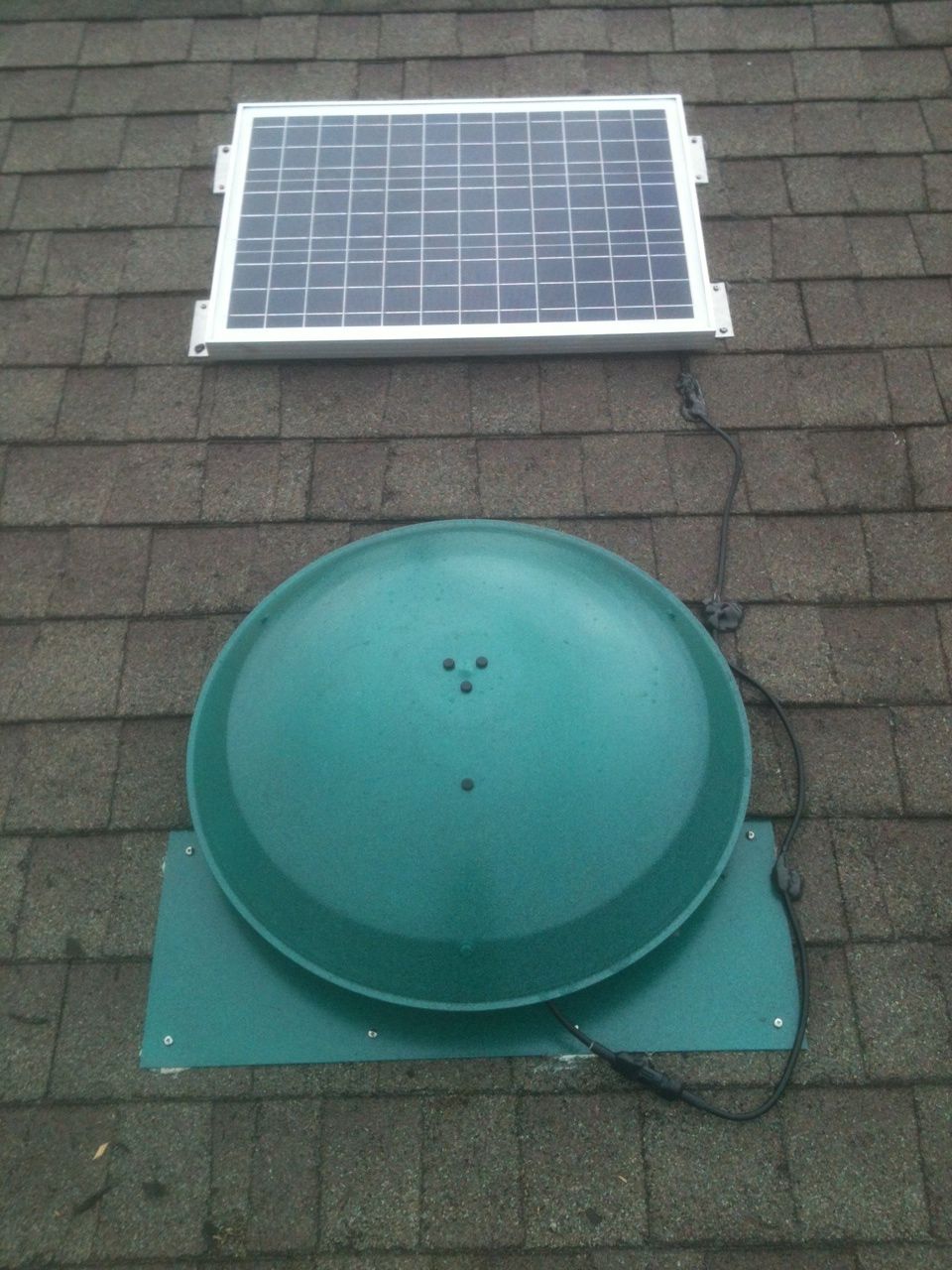
Is your attic so hot in summer that it bakes the rooms below, and would you rather not add another electric fan to your power bill? A 500 CFM solar powered roof mount exhaust fan is built for that problem: it sits on the roof, pulls hot air out of the attic, and runs on sunlight. This guide explains how it works, what the airflow figure means, and what to check before you put one on your roof.
How a Solar Powered Roof Fan Works
A solar powered roof fan has two main parts: a small solar panel and a fan mounted in a housing that sits on the roof. Sunlight hits the panel, the panel makes electricity, and the electricity runs the fan motor. The fan pulls hot air out of the attic and exhausts it outside, and cooler outdoor air is drawn in through the soffit vents or other intake vents. There is no wiring to the house electrical system and no switch to flip, since the fan runs when the sun shines, which is when the attic is hottest.
That timing is the main advantage of a solar fan. An electric attic fan needs wiring, a thermostat, and a switch, and it adds to the electric bill every hour it runs. A solar fan starts by itself on a sunny morning, runs hardest at midday when the roof is baking, and slows down as the sun drops. On a cloudy day it runs slower or not at all, which matches the lower heat load. Some models have a small battery or a hybrid connection that lets the fan run after sunset, but a basic solar fan runs on direct sunlight alone.
What 500 CFM Means
CFM stands for cubic feet per minute, and it measures how much air the fan moves. A rating of 500 CFM means the fan can move a moderate volume of air, which suits a small to medium attic. Airflow is the main capacity figure for an attic fan, and it has to be matched to the attic size. A fan that is too small will barely change the attic temperature, while a fan that is far too large can pull conditioned air out of the house through gaps in the ceiling, which wastes energy and can backdraft combustion appliances.
As a general rule of thumb, attic ventilation guides often suggest enough fan capacity to change the attic air regularly during hot weather, and the right number depends on the attic volume, the roof pitch, and the climate. That figure is a rough guide, not a specification for this fan, so measure your attic, check the intake vent area, and ask a roofer or a ventilation contractor whether 500 CFM is a reasonable match. The fan also needs enough intake ventilation to work: without open soffit vents, the fan will struggle to pull air and may pull it from the house instead.
Roof Mounting and Placement
A roof mount fan sits on the roof slope, usually near the ridge where hot air collects. Placement matters: a fan mounted too low on the slope will pull in cooler air from below while the hottest air stays trapped near the peak, and a fan mounted in the shade of a tree or a chimney will get less sun on its panel. A good spot is high on a south-facing slope that gets full sun through the middle of the day, with the panel angled to catch the sun.
The mounting has to be watertight. The fan housing sits on a flashing that slides under the shingles above it and over the shingles below it, so rain runs over the flashing and off the roof instead of under it. The flashing has to suit the roofing material, and the fasteners have to be sealed. A fan installed with the wrong flashing or with gaps in the seal will leak, and a roof leak costs far more than the fan saves. If you are not comfortable cutting into a roof, hire a roofer for the installation.
The Solar Panel and Its Position
The solar panel is the power source, so its position decides how well the fan works. Most roof mount fans have the panel built into the housing or mounted on an adjustable bracket, so it can be tilted toward the sun. A panel that faces south and is tilted to catch the midday sun will run the fan hardest when the attic is hottest. A panel that faces north or sits in the shade of a tree, a chimney, or a taller part of the roof will underperform.
Keep the panel clean. Dust, leaves, bird droppings, and pollen block sunlight and cut the output, so wipe the panel a few times a year and check it after storms. If the panel is adjustable, check the tilt once a year and make sure the bracket is tight. If the fan slows down or stops on a sunny day, check the panel first: a dirty panel, a loose wire, or a shaded panel is the most common cause.
When a Roof Fan Helps and When It Does Not
A roof exhaust fan helps most in a hot, sunny climate where the attic bakes all afternoon and the rooms below pick up that heat. It helps less in a mild climate, in a house with a well-insulated attic floor, or in an attic that already has good passive ventilation from ridge and soffit vents. In some houses, adding a powered fan to an attic with poor intake ventilation can pull conditioned air from the living space, which raises the cooling bill instead of lowering it.
Before you buy, check the attic insulation and the passive ventilation. If the attic floor is poorly insulated, adding insulation usually does more for comfort than adding a fan. If the soffit vents are blocked by insulation or paint, clear them first, since a fan without intake air cannot do its job. A roofer or an energy auditor can check the intake area, the insulation, and the air sealing, and tell you whether a fan is the right next step or whether insulation and sealing should come first.
Installation and Roof Care
Roof work is dangerous, and a fall from a roof can be serious, so do not install a roof fan unless you have safe access, a stable ladder, and experience working on a roof. Most homeowners are better off hiring a roofer. The installer will pick the location, cut the opening, fit the flashing, seal the fasteners, and check the fan and the panel. The job usually takes an hour or two once the location is chosen.
Ask the installer to show you the flashing, the sealant, and the panel wiring before they leave, and to confirm that the fan spins freely and the panel is clean. Check the roof around the fan after the first heavy rain to make sure there is no leak, and check it again after the first winter. Keep the area around the fan clear of leaves and debris, and do not walk on the roof more than necessary, since foot traffic can damage shingles and loosen flashing.
Maintenance for a Solar Roof Fan
A solar roof fan needs little maintenance, but it does need regular checks. Clean the solar panel a few times a year. Check the fan housing and the flashing each spring and fall for cracks, loose fasteners, or lifted shingles. Listen for new noises: a grinding or rattling sound can mean a worn bearing or a loose blade, and a fan that wobbles needs attention before it damages the housing.
The motor on a solar fan is usually a small direct-current motor, and it is not a part most owners service themselves. If the fan stops running on a sunny day and the panel is clean and in full sun, check the wiring connections first, then call the maker or a roofer. Keep the manual and the warranty paperwork, and note the model number, since the panel, the motor, and the housing are usually sold as a matched set.
Questions to Ask Before You Buy
Before you order, confirm the details that matter on your roof. What is the fan rated for, and what attic size does the maker suggest for 500 CFM? Is the solar panel built in or adjustable, and can it be positioned for full sun? What flashing is included, and does it suit your roofing material? Does the fan have a thermostat, a battery, or a hybrid power option, or does it run on sunlight alone? What is the warranty on the fan, the panel, and the motor, and who handles warranty service?
A 500 CFM solar powered roof mount exhaust fan is a simple way to vent a hot attic without wiring or running costs, and it works well when the attic has enough intake ventilation, the panel gets full sun, and the flashing is installed correctly. Check the insulation and the intake vents first, hire a roofer for the installation, and the fan will do its job every sunny day.