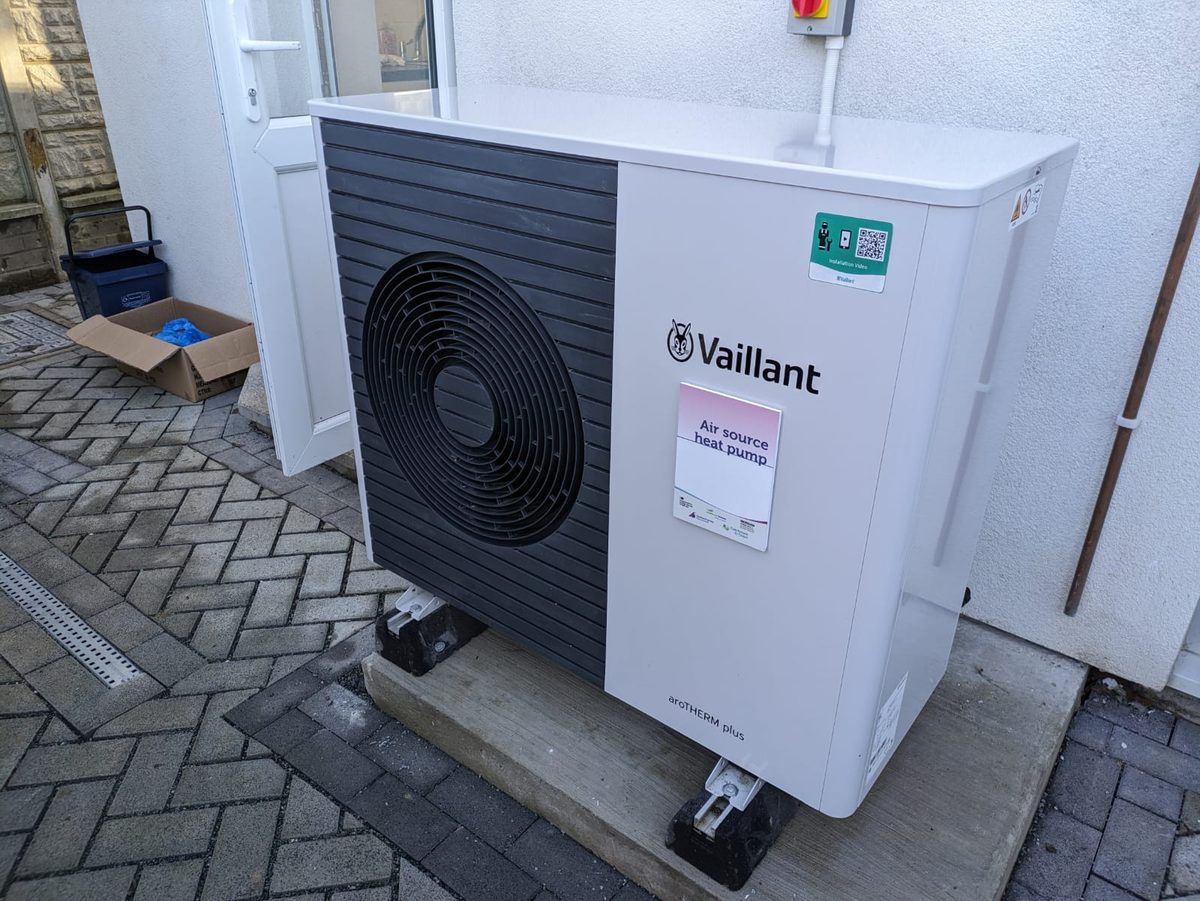
When an old packaged unit finally gives up, the replacement decision usually arrives in a hurry, on the hottest or coldest day of the year. A Goodman 2-ton packaged heat pump, model GPH1624H41, is the kind of single-cabinet system many homeowners consider at that moment: one outdoor box that heats in winter and cools in summer, connected to the house by ducts. This guide is written for that moment, when you need to compare, plan, and choose without rushing into a mistake.
It covers how a packaged heat pump works, how to compare one against what you have now, how to plan the replacement, and how to look after the new unit. The focus stays on the product type and the 2-ton capacity named in the listing, with factory specifications left to the manual and your contractor's guidance.
One cabinet for heating and cooling
A packaged heat pump keeps the compressor, the coils, the blower, and the controls together in a single weatherproof cabinet that sits outside the home. Ducts run from the cabinet into the house, carrying warmed air in winter and cooled air in summer. There is no indoor furnace, no separate indoor coil, and no refrigerant piping running through the living space.
That single-box design is the main reason people choose a packaged system. It frees indoor space, it keeps all the machinery in one place for service, and it replaces two ageing appliances with one new one. The Goodman GPH1624H41 is a 2-ton packaged heat pump, a modest residential size, and it belongs to the class of equipment that suits a smaller home or one level of a larger home.
Comparing it with what you have now
Start your comparison with what you already own. If your current setup is a separate furnace and air conditioner, a packaged heat pump removes the furnace and its flue, its gas line, and its indoor footprint. If your current setup is an old packaged air conditioner with electric heat strips, a heat pump changes how winter heat is made, moving heat from outdoors instead of creating it from electricity alone.
Make a short list of what matters to you: even temperatures from room to room, quiet operation, low maintenance, and running costs across a full year. Then ask the contractor to walk through how each option scores on that list in your home. A frank conversation about your current system's weak points, whether it is noisy, uneven, or costly to run, is worth more than any brochure.
Sizing for two seasons
A heat pump must satisfy two seasons, and that makes sizing more interesting than sizing a cooling-only unit. In summer it must remove enough heat and humidity to keep the house comfortable. In winter it must gather enough heat from cold outdoor air to hold the house warm. The two loads are rarely equal, and the contractor's job is to find a size that serves both without overshooting either.
The tool for that job is a load calculation, which looks at floor area, ceiling height, insulation, windows, air leakage, and local weather. Ask to see it. A 2-ton unit may be right for your home, or the calculation may point to a different size entirely, and that answer is worth having before the old unit comes out. An oversized heat pump will cycle on and off, cool the air fast while leaving dampness behind, and wear out early. An undersized one will lean on backup heat all winter and run without rest in summer.
Planning the swap
Swapping in a new packaged unit normally takes a single day, though a little preparation makes it go smoothly. Measure the existing pad and the duct openings before the new unit arrives, and confirm that the new cabinet fits the pad and lines up with the ducts. If the pad is cracked, sunken, or too small, pouring a new pad or repairing the old one should happen before delivery day.
Check the electrical supply as well. A packaged heat pump needs a dedicated circuit, a disconnect switch within sight of the unit, and wiring in good condition. The electrician should confirm the circuit and the breaker, and replace worn parts as part of the job. Tell the crew where the thermostat is, whether you want a new one, and how the house is used day to day, so they can set the controls to suit your routine.
Ducts, drains, and the details that matter
The new unit is only as good as its connections. Supply and return ducts must be sealed at the cabinet, insulated where they pass through unconditioned space, and sized to carry the airflow the blower moves. A condensate drain must slope away from the unit and run clear, with a trap where the design calls for one. The cabinet must sit level, with clearance around it for air and for a technician to open the panels.
On installation day, ask the crew to run the system in both heating and cooling modes and to check the temperature change across the system in each mode. Ask them to show you the filter location, the thermostat settings, and the disconnect switch. A careful installer will welcome those questions, and the answers will save you guesswork later.
Efficiency ratings in plain language
You will see efficiency ratings on heat pump listings, and they are worth understanding in general terms. SEER is a seasonal rating for cooling, and it gives a rough way to compare one cooling system with another. A higher rating generally points to lower running costs over a cooling season, but the rating alone does not tell you how a unit will perform in your home, with your ducts, in your climate.
Heating efficiency has its own ratings, and the same caution applies. Ratings are measured under test conditions, and real homes add duct losses, thermostat habits, and weather that the test bench never sees. Treat ratings as one part of the comparison, alongside sizing, duct condition, and the quality of the installation. A well-installed unit with a moderate rating will usually beat a poorly installed unit with a higher one.
Looking after the new unit
A packaged heat pump runs through every season, so give it a little care all year round. Follow the manual when you swap or wash the filter. Pull leaves, grass, and stored items away from the cabinet, and cut back plants that crowd its sides. In winter, watch for heavy ice collecting around the base, and let the defrost cycle melt frost from the outdoor coil. A short burst of steam during defrost is normal.
Set up one professional visit each year, timed for just before the season when the unit works hardest where you live. The technician should look over refrigerant charge, wiring, the blower, the drain, and the defrost controls. File the installation paperwork together, including the model number, the install date, and the warranty terms. A heat pump that gets regular attention holds temperature better and keeps going longer than one that is only noticed when it stops.