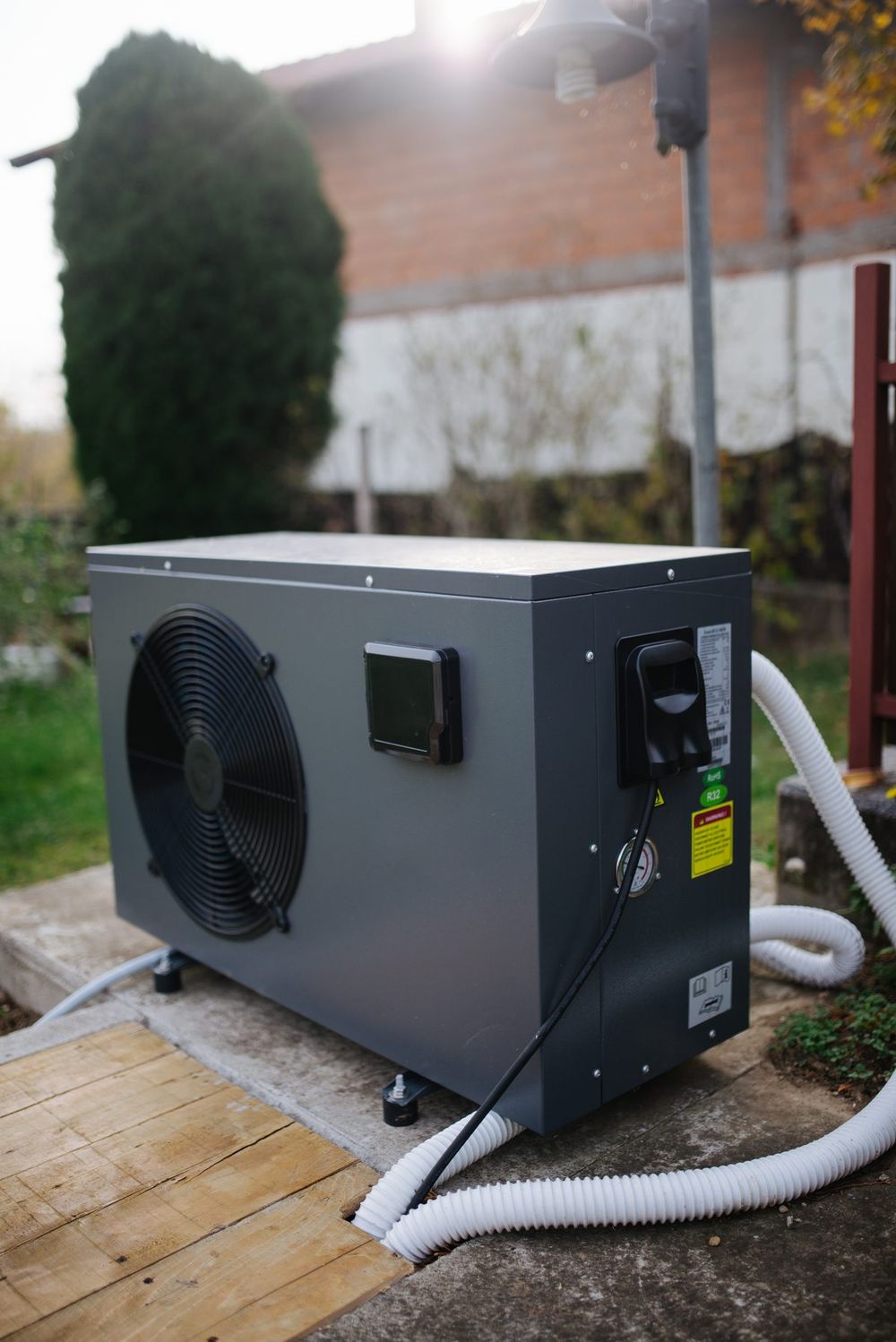
What if a single outdoor box could cool your home in summer and warm it in winter? That is the promise of a packaged heat pump. A Goodman 2-ton packaged heat pump, model GPH1524M41, holds the whole heating and cooling system in one cabinet outside the house, and ducts carry conditioned air to every room. If you want to replace an old furnace and air conditioner with one simpler system, this is the type of equipment worth understanding.
This guide explains how a packaged heat pump works, how it differs from a packaged air conditioner, what a 2-ton capacity means, and how installation and upkeep usually go. This guide stays with the product type and the 2-ton capacity named in the listing. It skips factory specifications and aims to leave you with clear questions for your contractor, not to stand in for the manual.
How a heat pump moves heat
A heat pump does not create heat the way a furnace does. It moves heat from one place to another. In summer it works like an air conditioner, pulling heat out of indoor air and releasing it outside. In winter it reverses: it pulls heat out of the outdoor air, even when that air feels cold, and moves it indoors. A reversing valve inside the unit switches the direction of the refrigerant flow, and the same coils and compressor serve both seasons.
That sounds like a trick, but it rests on a plain fact: outdoor air holds heat energy even on a cold day, and a heat pump is a machine for collecting it. Because it moves heat rather than making it from fuel, a heat pump can deliver more warmth for each unit of electricity it uses than a simple electric heater. How much more depends on the weather, the house, and the installation, and a contractor can explain what to expect in your climate.
Packaged heat pump versus packaged air conditioner
A packaged air conditioner cools only, and it usually pairs with a separate heater or a set of electric heat strips for winter warmth. A packaged heat pump heats and cools from the same cabinet, which means one unit to buy, one unit to maintain, and no separate furnace taking up indoor space. The Goodman GPH1524M41 is a packaged heat pump, so it covers both seasons from a single outdoor box.
The trade-off is that a heat pump's heating output falls as the outdoor temperature drops. In mild and moderate winters that rarely matters, and the heat pump carries the whole heating load. In colder regions the system may need backup heat for the coldest days, and the contractor should plan for that from the start. Ask how the system is set up to handle a cold snap, and what happens on the coldest night of the year.
What a 2-ton size covers
Cooling and heating capacity in this kind of equipment is measured in tons, and a 2-ton unit is a modest residential size. It suits a smaller home, a well-insulated home, one level of a larger home, or a home in a mild climate. The listing states a 2-ton capacity for this Goodman packaged heat pump, which tells you the class of home it is aimed at.
The right size comes from a load calculation that looks at floor area, ceiling height, insulation, windows, shade, and local climate, in both summer and winter. A heat pump that is sized only for cooling may struggle on a cold January morning, while one sized only for heating may short-cycle in summer and leave humidity behind. Ask your contractor to size for both seasons and to show you the calculation.
Heating in cold weather and backup heat
On a mild winter day a heat pump warms a home quietly and steadily, running in long, even cycles that hold a stable temperature. As the outdoor temperature falls, the heat pump works harder and delivers less heat, and at some point the thermostat calls for backup heat. Backup heat usually comes from electric heat strips inside the packaged unit, which warm the air directly while the heat pump keeps running.
Backup heat is a safety net, not a failure. It keeps the house warm through the coldest weather, and it costs more to run than the heat pump alone, so the changeover point matters. Ask the contractor where the balance point is set for your home, and how the thermostat decides when to bring the backup heat in. A well-set system uses backup heat rarely and only when it is genuinely needed.
Placement and airflow
A packaged heat pump most often stands on a poured concrete pad beside the house at ground level, with ducts passing from the cabinet through the wall. Rooftop and crawl-space spots exist too, yet the pad beside the house remains the usual home choice. The pad has to be flat and firm, with rain running away from the cabinet, while open space around the box lets air move and gives a technician room to work.
Ducts carry the heated and cooled air, so their condition shapes comfort in both seasons. Leaky or undersized ducts waste conditioned air and make some rooms cold while others are warm. Before a new unit goes in, ask the contractor to inspect the ducts, seal the joints, and confirm the sizing suits the airflow a 2-ton blower moves. Good ducts are the difference between a system that feels even and one that never quite satisfies.
Thermostat habits for a heat pump
A heat pump likes steady settings. Set the thermostat to a comfortable temperature and leave it there, letting the system run in long, gentle cycles. Big setbacks, where you drop the temperature far down overnight and then ask for a rapid warm-up in the morning, can force the system onto backup heat and wipe out the savings the heat pump offers.
If your thermostat has a heat pump setting or an auxiliary heat indicator, learn what it shows. A short spell of backup heat on a bitter morning is normal. Backup heat running for hours on a mild day is a sign that something needs checking. A programmable thermostat set up for a heat pump, with small temperature changes spread over time, is kinder to the equipment and to your running costs than a thermostat meant for a furnace.
Maintenance through the year
A packaged heat pump earns its keep in summer and winter alike, so it deserves a yearly professional visit plus a handful of easy routines from you. Follow the manual's timetable for swapping or washing the filter, and do it sooner when pets or dust load it up. Pull leaves, cuttings, and stored clutter away from the cabinet, and prune any growth that crowds its sides.
In winter, keep an eye out for ice building up around the base of the unit, and let the defrost cycle do its work. The unit will briefly reverse to melt frost from the outdoor coil, and a puff of steam during defrost is normal. If ice keeps building or the unit stays frozen, call a technician rather than chipping at it yourself. A yearly professional visit should cover refrigerant charge, electrical connections, the blower, the drain, and the defrost controls, so the system is ready for both summer and winter.