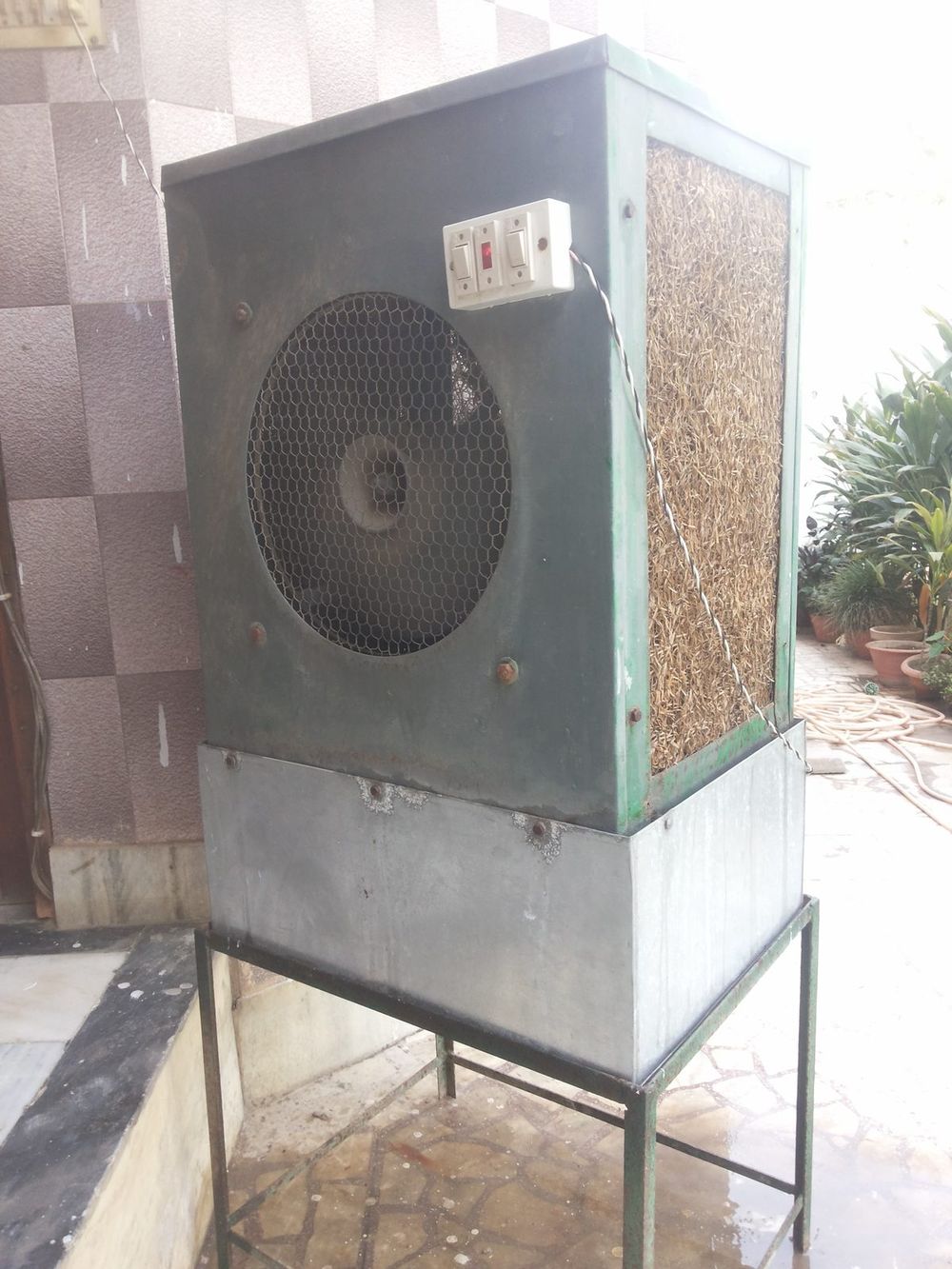
Can a small portable box really cool a room without refrigerant, ductwork, or a window unit? An evaporative air cooler can, as long as the air is dry enough. The Sunpentown SF608R is an air cooler, and this guide explains how evaporative cooling works, where a cooler like this one fits, and how to use it so the room actually feels cooler instead of just damper.
What an evaporative air cooler is
An evaporative air cooler, sometimes called a swamp cooler, cools air by passing it over a wet pad. A fan pulls warm, dry room air through pads soaked with water, the water evaporates into the air, and the air coming out the other side is cooler and more humid than the air that went in. The process uses only a fan, a small water pump, and a tank of water. There is no compressor, no refrigerant, and no exhaust hose to run out a window.
The SF608R is a portable unit, which means it stands on the floor, plugs into a standard outlet, and rolls from room to room. Fill the tank with water, switch the fan on, and the pump keeps the pads wet while the fan moves the cooled air into the room. Some coolers add an ice compartment or a remote control, and the product literature for the unit lists which features it includes. The cooler works well when it sits near an open door or window, so fresh dry air can flow in and the moist air has somewhere to go.
How evaporation cools the air
Evaporation takes heat out of the air. When water changes from liquid to vapor, it absorbs heat from its surroundings, and in a cooler that heat comes from the air passing over the wet pads. The drier the incoming air, the more water can evaporate into it, and the more the air cools. That is why evaporative coolers work well in dry climates and poorly in humid ones: in humid air there is little room for more water vapor, so little evaporation happens and little cooling follows.
The drop in temperature depends on the dryness of the air and the airflow through the pads. On a hot, dry afternoon the air coming out of a cooler can feel much cooler than the room air, while on a muggy day the same cooler may barely change the temperature and will add moisture the room does not need. The cooler also raises the humidity in the room, which feels pleasant when the air is dry and stuffy when the air is already damp. Check the weather: if the humidity is high, a fan or an air conditioner serves the room better than an evaporative cooler.
Where an air cooler fits well
An air cooler fits dry climates and dry rooms. It suits a bedroom, a home office, a workshop, or a garage in an arid region, and it works well in spaces where a window unit is not practical, such as a rented room or a space with windows that do not open. It also fits outdoor and semi-outdoor spaces, like a covered patio or a workshop with the doors open, where an air conditioner would be pointless because the cooled air would escape right away.
The cooler is a spot cooler rather than a whole-house solution. It cools the air near the unit and the people sitting in front of it, not every corner of a large open space. Put it where people actually sit, point the louvers toward them, and let the cooled air flow across the room. In a large room, one small cooler will not change the temperature of the whole space, and expecting it to do so leads to disappointment. Match the cooler to the room and the climate, and it does its job well.
Setting up the cooler
Setup is simple, but a few details make the difference between a cooler that works and one that just blows damp air. Place the unit on a level floor near an open door or window, with the air outlet facing into the room and the people in it. Fill the tank with clean water up to the marked level, and do not overfill it. Let the pads soak for a few minutes before switching the fan to high, so the air passes over fully wet pads from the start.
Ventilation matters more than most people expect. An evaporative cooler adds moisture to the air, and without a way for that moist air to leave, the room gets more humid without getting much cooler. Crack a window or a door on the far side of the room so air can flow through: dry air comes in, passes over the pads, and the moist air leaves. If the room feels sticky after an hour, open the window wider or turn the cooler down. A room that keeps getting more humid is a room that needs more ventilation, not a bigger cooler.
Using the cooler day to day
Run the cooler on the fan speed that matches the need. High speed moves more air and cools faster, but it is louder and uses the water faster. Low speed is quieter and suits sleeping or working, as long as the room is not too hot. Refill the tank before it runs dry, since running the pump dry can damage it, and check the water level before leaving the cooler running overnight. Empty the tank if the cooler will sit unused for days, since standing water grows stale and can smell.
Keep the cooler clean. Wipe the outside with a damp cloth, rinse the tank now and then, and clean or replace the pads on the schedule in the product literature. Hard water leaves mineral deposits on the pads, and dirty pads cool less and can smell. If the air coming out of the cooler smells musty, the pads or the tank usually need cleaning. Use clean tap water, and if the local water is very hard, consider using filtered water to slow mineral buildup on the pads.
Air cooler versus fan versus air conditioner
A fan moves air without cooling it. It helps because moving air over skin feels cooler, but it does not change the temperature of the room, and it does nothing for humidity. An evaporative cooler goes a step further: it actually cools the air and adds moisture, which helps in dry heat but hurts in humid heat. An air conditioner cools and dehumidifies at the same time, and it works in any humidity, but it costs more to buy and to run, and it needs a window or a wall opening.
The cooler sits in the middle. It costs less to run than an air conditioner, since it uses only a fan and a small pump, and it needs no installation beyond a power outlet and a water fill. It also adds moisture, which can be a benefit in a dry climate where the air dries out skin and sinuses. The trade-off is that it cannot dehumidify, it cannot cool a humid room, and it cannot match an air conditioner on a very hot day. Pick the tool that matches the climate and the room, and the cooler earns its place.
What to check before you buy
Check the climate first. If the summers where you live are dry, with low humidity on hot afternoons, an evaporative cooler is a sensible choice. If the summers are humid, the cooler will add moisture the room does not need, and an air conditioner or a fan serves better. Check the room next: a cooler suits a single room or a spot near where people sit, not a whole house or a large open space.
Look at the practical details as well. A tank that is easy to fill and empty, pads that are easy to reach and clean, and wheels that roll smoothly all matter when you use the cooler every day. Check the warranty terms and keep the model number and the purchase date with the paperwork. The faults that show up on a cooler are usually simple: a tired pump, a clogged pad, or a tank that seeps. Keep it clean, keep it filled, and give it fresh air to work with.