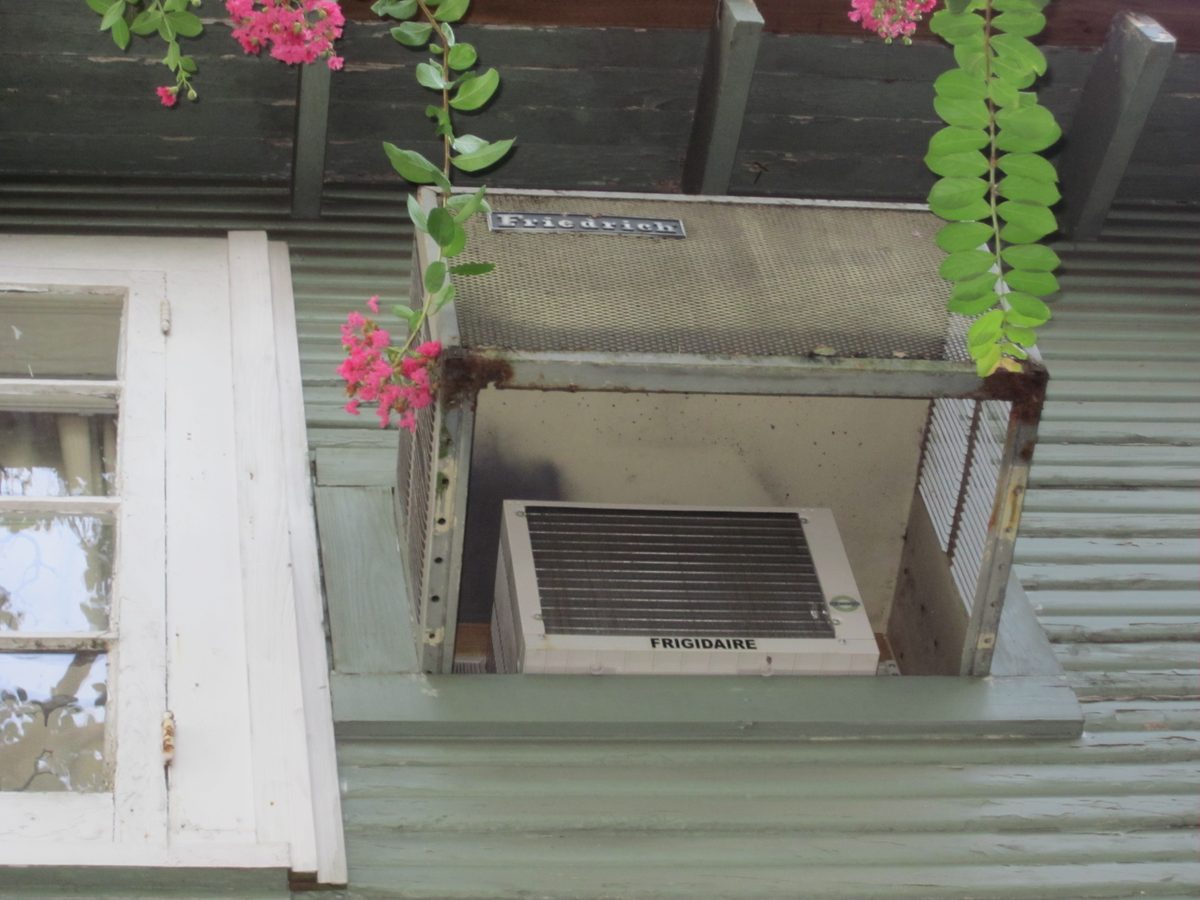
What heats and cools a hotel room, a hospital room, or a small apartment without any ductwork at all? The answer is usually a PTAC unit, a self-contained box that sits in the wall under a window. The YMGI PTHP-09K-14B(43) is a PTAC unit, and this guide explains what that means, how the unit works, where it fits, and what to know before you install or replace one.
What a PTAC unit is
PTAC stands for packaged terminal air conditioner. It is one self-contained cabinet that mounts through an exterior wall, usually below a window, and heats and cools a single room on its own. The room side holds the evaporator coil and the fan, the outdoor side holds the compressor and the condenser coil, and the controls sit between them. The unit brings in some outdoor air through a vent, conditions the room air, and sends it back into the room through a grille at the top of the cabinet.
The PTAC is the standard choice for rooms that need independent control. Each room gets its own unit, its own thermostat setting, and its own on-off control, so one room can be cool while the next room is warm. There is no ductwork, no central system to balance, and no need to heat or cool rooms that are not in use. Hotels, motels, hospitals, nursing homes, dormitories, and small apartments use PTAC units for exactly that reason, and they also show up in additions, converted garages, and home offices.
How a PTAC heats and cools
In cooling mode, a PTAC works like any air conditioner. The compressor pumps refrigerant through the evaporator coil, the fan pulls warm room air across the coil, the refrigerant absorbs the heat, and the outdoor coil releases it outside. The indoor coil also pulls moisture out of the air as it cools, which helps the room feel comfortable even before the temperature drops much. The outdoor side of the unit needs clear airflow, since it is dumping all the heat the room gives up.
Heating in a PTAC can come from more than one source. Many units work as heat pumps, reversing the cooling cycle to gather heat from the outdoor air and move it inside. Others use electric resistance heat, where an electric element warms the air directly, and some offer both. Heat pump heating uses less electricity than resistance heating in mild weather, but its output drops as the outdoor temperature falls. Resistance heat works at any outdoor temperature but uses more electricity. The PTHP name points to a heat pump design, and the product literature for the unit lists which heating modes it provides.
Where PTAC units fit well
A PTAC fits any single room that needs its own heating and cooling and has an exterior wall to mount through. Guest rooms, patient rooms, dorm rooms, and small apartments are the classic cases, since each room needs its own control and the building has no ductwork to serve them. A PTAC also fits a home addition, a converted garage, a sunroom, or a home office where extending the central ductwork would cost more than the room is worth.
The unit needs a wall sleeve, which is a metal box set into the wall that the chassis slides into. The sleeve stays in the wall permanently, and the chassis can be pulled out for service or swapped for a new one without cutting a new opening. If a building already has sleeves from older units, the first question is whether the new chassis fits the existing sleeve, since sleeve sizes vary by brand and by era. A chassis that does not fit the sleeve means either a different unit or a new sleeve, and a new sleeve means cutting and framing work.
Sizing a PTAC for a room
PTAC units are sized to the room they serve, and the room decides the answer. Measure the room, note the windows and which way they face, check the insulation, and think about how the room is used. A small bedroom with one shaded window needs far less capacity than a sunny room with a wall of glass, a kitchen attached, or a lot of people coming and going. A room above a garage or under a hot roof carries extra load, and a room with high ceilings needs more capacity than a room of the same floor area with standard ceilings.
As a rough guide, a small PTAC often suits a room in the range of 300 to 400 square feet, but the room itself shifts that range. Getting the size close matters: a unit that is far too small runs all day and still falls behind on hot afternoons, while one that is far too large chills the air fast and switches off before it has drawn much moisture out, leaving the room cool but clammy. If the room sits on the edge between two sizes, a contractor can run a quick load check rather than leaving it to a guess at the store.
Installation notes
A PTAC install starts with the wall opening and the sleeve. When a sleeve is already in place, measure its inside dimensions and compare them with the new chassis, depth included. When there is no opening, the job means cutting the wall, framing the hole, fitting a header above it, sealing the edges, and setting the sleeve level with a slight outward slope so condensate drains outside. The seal around the sleeve has to keep out drafts, rain, and insects, and the grille outside needs open space for airflow.
Power comes next. PTAC units are made in different voltages, and the plug shape and the circuit rating must match the unit exactly. Read the nameplate on the unit and look at the outlet in the wall before buying, and have an electrician run a new dedicated circuit if the existing one does not match. Adapters and extension cords are not a safe workaround. Once the chassis slides into the sleeve and plugs in, confirm it sits level, the seal is snug, and the drain path is open before switching the unit on for the first time.
Everyday use and maintenance
A PTAC stays healthy with a little regular attention. Slide the filter out from the front every few weeks while the unit is in heavy use and wash it under a tap; a dirty filter chokes airflow, ices the coil, and makes the unit labor for less cooling. Dust the front grille and louvers, vacuum the coils when you can reach them, and look at the drain at the back of the sleeve to confirm water is moving outside while the unit runs.
When the season changes, clean the filter, wipe the cabinet, and run the unit through both heating and cooling for a while to confirm it works normally before the weather turns. Check the seal around the sleeve, look at the outside grille, and clear leaves and debris from the rear so air can pass through the outdoor coil. New noises, water dripping inside, or weak heating or cooling are all reasons to switch the unit off and call a technician instead of running it through the trouble, since a small fault gets pricier the longer it runs.
PTAC versus other room options
A PTAC is one of several ways to heat and cool a single room, and the right choice depends on the room and the building. A window unit is cheaper and easier to install, but it blocks the window, is easier to remove from outside, and usually cools only. A through-the-wall unit is similar to a PTAC in layout but is generally a cooling-only box for homes rather than a heating and cooling unit for commercial rooms. A ductless mini-split is quieter and more efficient, but it costs more and needs a separate outdoor unit and refrigerant lines.
The PTAC wins where rooms need independent control, quick replacement, and both heating and cooling from one box. A hotel can swap a failed chassis in an hour without disturbing the guest in the next room, and a building manager can keep a spare chassis on hand for exactly that reason. The trade-off is noise and efficiency: the compressor sits in the room with you, and a PTAC is generally louder and less efficient than a split system. For a room that needs its own control and a fast swap when something fails, that trade-off is usually worth it.
Questions to ask before you buy
Confirm with the seller which sleeve size the chassis fits, which voltage and plug type it needs, and which heating modes it offers. Ask for a quote that lists the chassis, the sleeve when one is needed, the grille, the remote or wall thermostat, and the installation labor. Ask how the capacity was picked for the room and what the options are if the unit turns out to be too small or too large once it is running.
Go over the warranty on the compressor, the parts, and the labor, and find out who handles a claim when something fails. Ask whether the installer will check the drain, the seal, and the electrical circuit as part of the job, and whether the company comes back to look at the unit after the first week of use. Note the model number and the install date and keep them with the warranty paperwork, since both are needed whenever you call for parts or service.