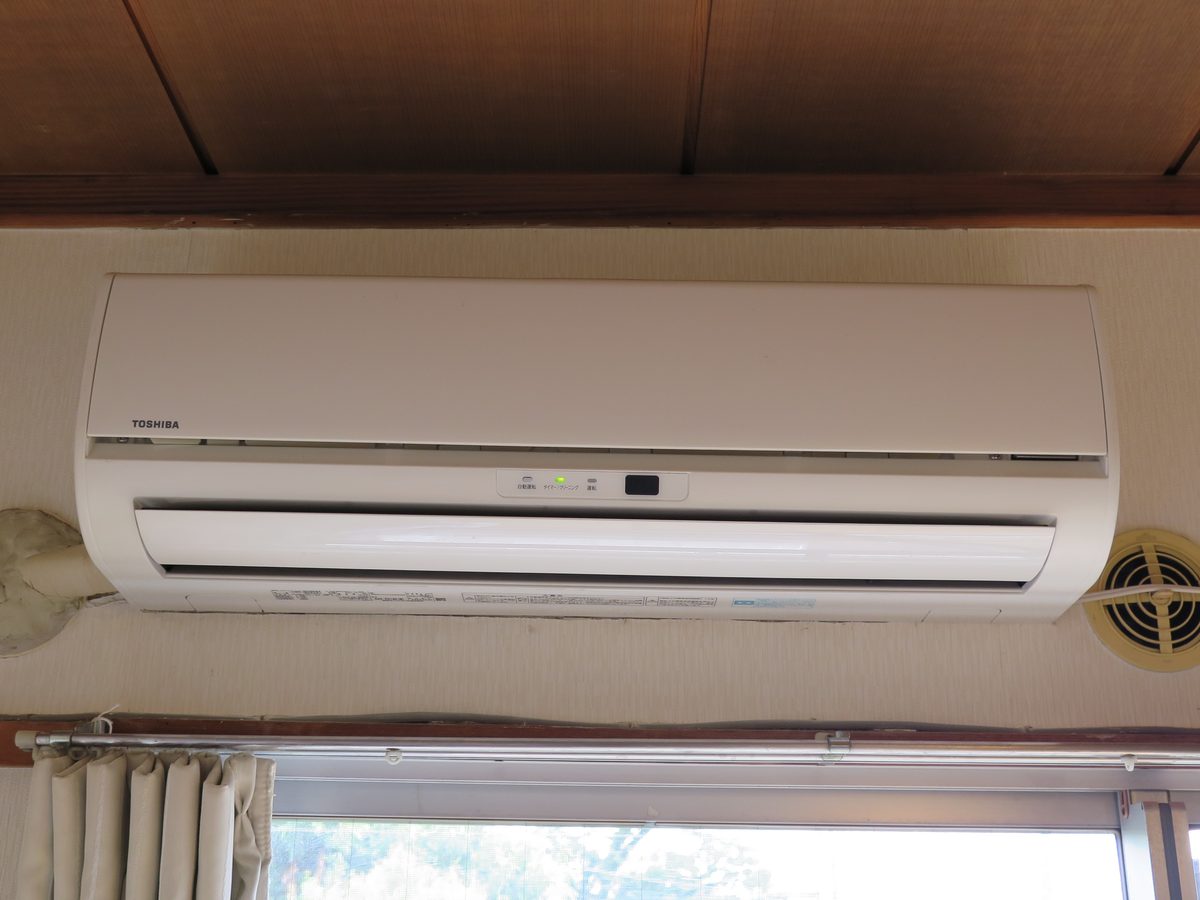
Can one wall-mounted unit cool a large living room, a finished basement, or an open-plan space without running ductwork through the whole house? That is the question a 24,000 BTU split air conditioner is built to answer. The Gree GWH24ACD3DNA1B is a 220-volt split system, which means it has an indoor unit on the wall and an outdoor unit outside, connected by refrigerant lines. This guide explains how that layout works, what 24,000 BTU covers, and what to sort out before installation day.
What a split air conditioner is
A split air conditioner separates the noisy half of the job from the quiet half. The outdoor unit holds the compressor and the condenser coil, and the indoor unit holds the evaporator coil and the fan that blows cool air into the room. A small bundle of refrigerant lines, a drain line, and control wiring runs between them through a small hole in the wall. There is no ductwork, no window unit blocking the view, and no large box sitting on the floor.
The indoor unit mounts high on an interior wall, where it can throw air across the room. A remote control sets the temperature, fan speed, and mode, and many units swing the louvers to spread air more evenly. The outdoor unit sits on a pad or a wall bracket outside, where it can dump heat into the open air. Because the compressor lives outside, the indoor unit runs quietly enough for a bedroom, a home office, or a living room where people watch television.
What 24,000 BTU covers
BTU, short for British Thermal Unit, measures how much heat an air conditioner can move in an hour. A 24,000 BTU unit moves about twice as much heat as a 12,000 BTU unit, which makes it a good fit for larger single rooms or open areas. As a rough guide, a unit of this size often suits a space in the range of 1,000 to 1,500 square feet, but that range shifts a lot with the room itself. High ceilings, big south-facing windows, poor insulation, and a kitchen that runs hot all push the need upward, while a shaded, well-insulated room needs less.
The right way to size a room unit is to measure the room and think about how it is used. A living room with an open kitchen and a dining area is really one big space, and the unit has to cool all of it. A room with a wall of glass that catches the afternoon sun will feel the load more than a room shaded by trees. If the space is used for sleeping, the unit also has to keep humidity in check overnight, since damp air feels warmer than dry air at the same temperature. When the space is on the edge between two sizes, a contractor can run a quick load check rather than guessing.
Why this unit runs on 220 volts
The GWH24ACD3DNA1B runs on 220 volts, which is the standard supply for larger home appliances in the United States. A unit of this size draws more current than a small window unit, and running it on a 220-volt circuit keeps the wiring and the breaker within safe limits. Most homes already have 220-volt service at the panel, but the room where the unit goes may not have a circuit in place, so the installation usually includes running a new dedicated circuit from the panel to the outdoor unit.
That electrical work is part of the installation cost and part of the safety of the job. A dedicated circuit means the air conditioner is not sharing a breaker with other appliances, and the disconnect near the outdoor unit lets a technician cut power quickly during service. Ask the installer whether the quote includes the electrical run, the breaker, and the disconnect, and confirm that the work will be done by a licensed electrician or a contractor licensed for that work. An undersized wire or a shared circuit is a fire risk and a common source of nuisance breaker trips.
How a split system cools a room
Cooling works by moving heat rather than creating cold. Inside the indoor unit, cold refrigerant flows through the evaporator coil, and the fan pulls warm room air across it. The refrigerant absorbs heat from the air and carries it outside through the lines to the outdoor unit, where the compressor and condenser coil release it into the open air. The cycle repeats as long as the thermostat calls for cooling, and the indoor coil also pulls moisture out of the air as it cools, which is why a room feels more comfortable even before the temperature drops much.
Many split systems also reverse the cycle to provide heat, acting as a heat pump in cooler months. Whether a given unit offers heating depends on its design, so check the mode list on the remote or the product literature rather than assuming. In cooling mode, the most useful habits are simple: keep doors and windows closed while the unit runs, set a steady temperature rather than swinging the thermostat up and down, and let the fan run long enough to dehumidify the room instead of shutting the unit off after a few minutes.
Where a 24,000 BTU split unit fits well
A unit of this size fits rooms that a small window unit cannot handle. Large living rooms, open-plan kitchen and dining areas, finished basements, converted garages, and home additions without ductwork are common cases. It also works well in homes where one room is always warmer than the rest, such as a sunroom or a top-floor bedroom, because it cools that room directly instead of asking the central system to work harder for the whole house.
The wall-mounted indoor unit needs a clear spot on an interior wall with space above and below it for air to circulate, and the outdoor unit needs a level spot outside with airflow on all sides. Rooms with very high ceilings or open stairwells are harder to cool with a single wall unit, since cool air sinks and warm air rises, and the unit can only throw air so far. In a long, narrow space, the far end may stay warmer, so talk with the installer about placement and whether a second unit or a different layout would serve the space better.
Installation notes
Installation starts with placement. The indoor unit goes on a wall where the refrigerant lines can reach the outdoor unit through the shortest practical route, and the drain line needs a downward slope so condensate flows out instead of backing up into the room. The outdoor unit sits on a pad, a stand, or a wall bracket, level and clear of shrubs, fences, and dryer vents. The lines between them are insulated, sealed where they pass through the wall, and protected from damage.
After the units are mounted, the installer pressure-tests the lines, evacuates air and moisture with a vacuum pump, releases the refrigerant, and checks the charge and the drain. That evacuation step matters: air and moisture left in the lines reduce cooling and can damage the compressor over time. Ask the installer to show you the drain outlet, the disconnect location, and the filter, and to walk you through the remote before leaving. Keep the installation paperwork and any warranty registration in one place.
Everyday use and maintenance
Day-to-day care is mostly about the filter and the outdoor unit. Wash or replace the indoor filter every few weeks during heavy use, since a dirty filter cuts airflow, ices the coil, and makes the unit work harder for less cooling. Wipe the indoor unit with a dry cloth, keep the louvers free of dust, and check the drain outlet outside now and then to make sure water is flowing when the unit runs. Around the outdoor unit, clear leaves and grass clippings and trim back plants so air can move through the coil.
Once a year, have a technician inspect the system before the hot season. A service visit covers the refrigerant charge, electrical connections, fan and coil condition, and a check for leaks or worn insulation on the lines. If the unit starts making new noises, drips water inside, or cools less than it used to, do not keep running it and hoping it improves; turn it off and call for service, since a small leak or a failing fan motor gets more expensive the longer it runs. Write down the model number and the install date, since both come up whenever you call for parts or warranty help.
Questions to ask before you buy
Before you commit, confirm the capacity, the voltage, and everything the price covers: both units, the line set, the bracket or pad, the electrical circuit, the drain work, and the remote. Ask how the installer chose the size for your room and what the options are if the unit proves too small or too large for the space once it is running. Go over the warranty on the compressor, the parts, and the labor, and find out whether the installer handles warranty claims or leaves them to you.
Ask about heating too, if the room needs it, and how the unit behaves when the weather turns cold. Some split systems keep heating well below freezing and some do not, and that difference matters when the unit is the main heat source for a room. Finally, ask who will do the work and whether the company returns to check the system after the first week of use. A short follow-up visit catches small issues, like a drain that drips or a line that vibrates, while they are still easy to fix.