How do you heat and cool three or four rooms when the house has no ductwork and a single wall unit is not enough? A multi-zone ductless mini-split is built for exactly that problem. This 30,000 BTU, 2.5-ton system pairs one outdoor unit with several indoor units, offers both heating and cooling, uses inverter technology, and runs on 230 volts at 60 Hz. This guide explains how the zones work together, how to think about sizing each room, and what installation involves.
What a multi-zone mini-split is
A multi-zone mini-split has one outdoor unit connected to more than one indoor unit. Each indoor unit serves its own room or zone, with its own temperature setting and its own remote control, while the single outdoor unit does the work of moving heat for all of them. Refrigerant lines run from the outdoor unit to each indoor unit, usually through a small hole in the wall, and each indoor unit has its own drain line for condensate. There is no ductwork anywhere in the house.
The layout suits homes where rooms need different temperatures. A bedroom can stay cool for sleeping while the living room stays a few degrees warmer, and a home office can be cooled during the day without cooling empty bedrooms. Because each zone has its own thermostat setting, the system only works as hard as the rooms that are calling for heating or cooling, instead of conditioning the whole house to one temperature all day.
What 30,000 BTU and 2.5 tons mean here
Capacity in a multi-zone system is shared. The 30,000 BTU figure, equal to 2.5 tons, is the total capacity of the outdoor unit, and the indoor units draw on that total together. If one room calls for full cooling while the others are off, that room can use a large share of the capacity. If every zone calls at once on the hottest afternoon of the year, the total is divided among them, and each room gets its portion. That is why the sizing of a multi-zone system looks at both the size of each room and the size of the whole house at once.
As a rough guide, 30,000 BTU often suits a home or a set of rooms totaling around 1,500 square feet, but the rooms themselves decide the real answer. A sunny top-floor bedroom, a kitchen that runs hot, and a shaded ground-floor room all need different amounts of capacity per square foot. A contractor sizes each indoor unit to its room and then checks that the outdoor unit can carry the combined load on a design day. Oversizing the outdoor unit wastes money, and undersizing it leaves every room short when they all call at once.
Heating, cooling, and inverter technology
This system provides both heating and cooling, which means it works as a heat pump. In cooling mode it moves heat out of the rooms and dumps it outside. In heating mode it reverses the flow, pulls heat out of the outdoor air, and moves it inside. A heat pump can move heat even when the outdoor air feels cold, though its output drops as the temperature falls, and how far it keeps up depends on the climate and the design of the unit. In mild climates a heat pump can be the main heat source; in colder areas it often works alongside another heat source for the coldest weeks.
Inverter technology changes how the compressor runs. Instead of switching fully on and fully off, an inverter-driven compressor speeds up and slows down to match the load. When only one small room needs a little cooling, the compressor runs slowly and quietly. When every zone calls at once, it ramps up. The result is steadier room temperatures, less on-off cycling, and lower electricity use than a fixed-speed compressor doing the same job. It also means the system can respond quickly when a room warms up, since the compressor can ramp up instead of waiting for a full start cycle.
Sizing each zone
Each indoor unit is sized to its own room, and the room list matters more than the total square footage. Measure each room, note the windows and which way they face, check the insulation, and think about how the room is used. A bedroom used only at night needs less capacity than a living room with a wall of west-facing glass and a kitchen attached. A room above a garage or under a hot roof carries extra load. A contractor runs a load calculation for each room and picks an indoor unit that covers that room without going far over.
The number of zones matters too. Adding zones adds indoor units, line sets, and drain runs, and each one adds cost and installation time. It is worth mapping out which rooms truly need their own zone and which can share. A small hallway or a bathroom often stays comfortable on air spilling over from a neighboring room, while a bedroom with a door that stays shut needs its own unit. Walk the house with the installer and agree on the zone list before any lines are run, since moving an indoor unit later means new holes and new lines.
Installation notes
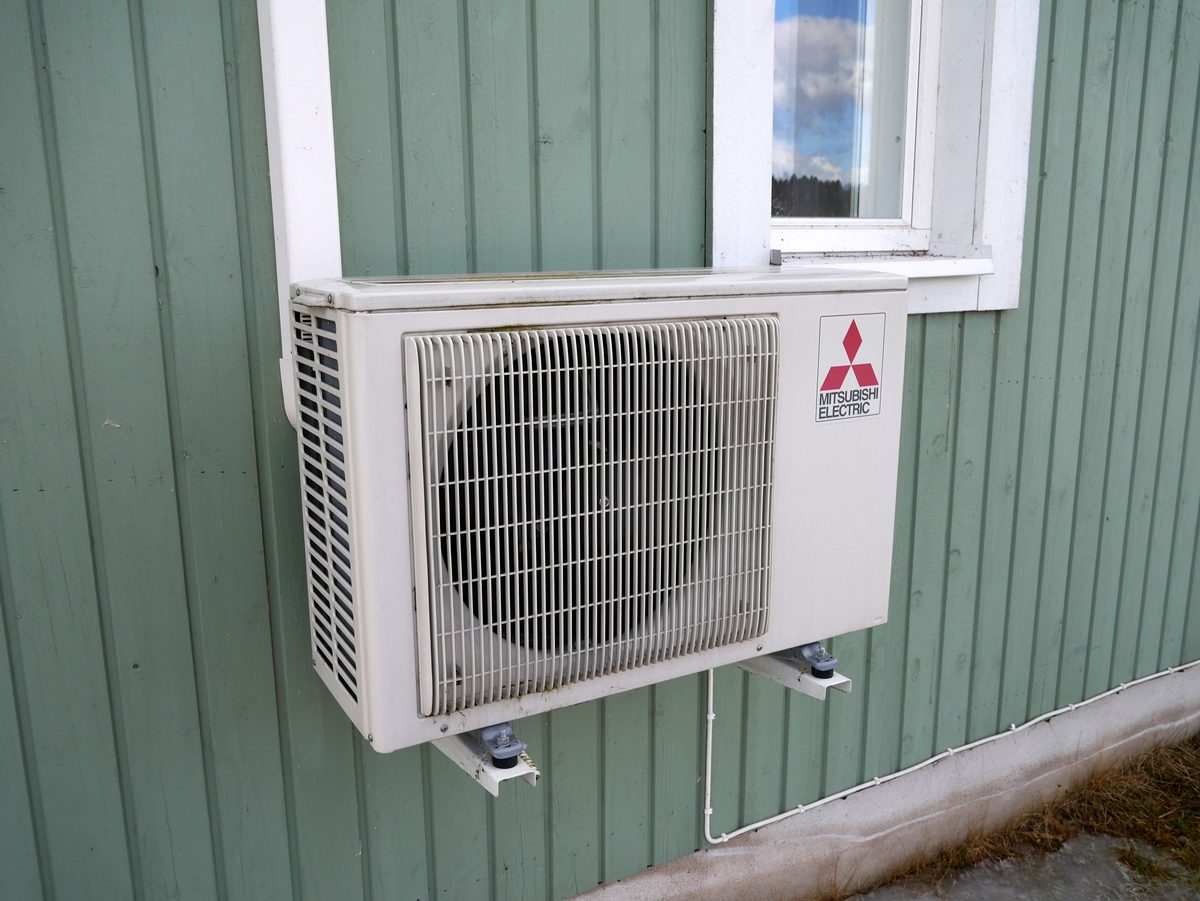
Installing a multi-zone system takes more planning than a single-zone unit, because every indoor unit needs a line set, a drain, and a control wire back to the outdoor unit. The outdoor unit sits on a pad or a wall bracket outside, level and clear of shrubs and dryer vents, with room for airflow on all sides. Each indoor unit mounts high on an interior wall in its room, with space above and below for air to circulate and a clear path for the drain line to slope downward to the outside.
The electrical work runs on 230 volts at 60 Hz, which is standard household supply in the United States, and the system needs a dedicated circuit with a disconnect near the outdoor unit. After the units are mounted, the installer pressure-tests each line set, evacuates air and moisture with a vacuum pump, releases the refrigerant, and checks the charge and every drain. That evacuation step matters for every zone, since air or moisture left in any line set reduces performance and can damage the compressor. Ask the installer to walk you through each remote and to label which remote belongs to which room before leaving.
Everyday use and maintenance
Daily care is simple but regular. Wash or replace the filter in each indoor unit every few weeks during heavy use, since a dirty filter cuts airflow and ices the coil. Keep the louvers free of dust, wipe the indoor units with a dry cloth, and check the drain outlets outside to make sure water is flowing when the system runs. Around the outdoor unit, clear leaves and grass clippings and trim back plants so air can move through the coil.
Once a year, have a technician inspect the whole system before the hot season. A service visit covers the refrigerant charge, electrical connections, fan and coil condition in each indoor unit, and a check for leaks or worn insulation on the line sets. If one zone stops cooling while the others work fine, the problem is often local to that zone, such as a dirty filter, a blocked drain, or a remote set to the wrong mode. If all zones struggle at once, the outdoor unit is the likely cause, and it is worth calling for service rather than running the system through the problem.
Questions to ask your contractor
Ask how each indoor unit was sized and whether a written load calculation covers every room. Ask what is included in the price: the outdoor unit, each indoor unit, every line set, the drain work, the electrical circuit, the remotes, permits, and haul-away of any old equipment. Ask how long the work will take, since a multi-zone job often runs more than a day, and ask what happens if a line route turns out to be blocked by framing or plumbing once work starts.
Also ask about the heating performance in your climate and whether the system is expected to carry the house through the coldest weeks or to work alongside another heat source. Ask about the warranty on the compressor, the parts, and the labor, and who handles a warranty claim if something fails. Finally, ask for a short follow-up visit after the first week of use, so small issues like a dripping drain or a vibrating line can be fixed while the job is still fresh.