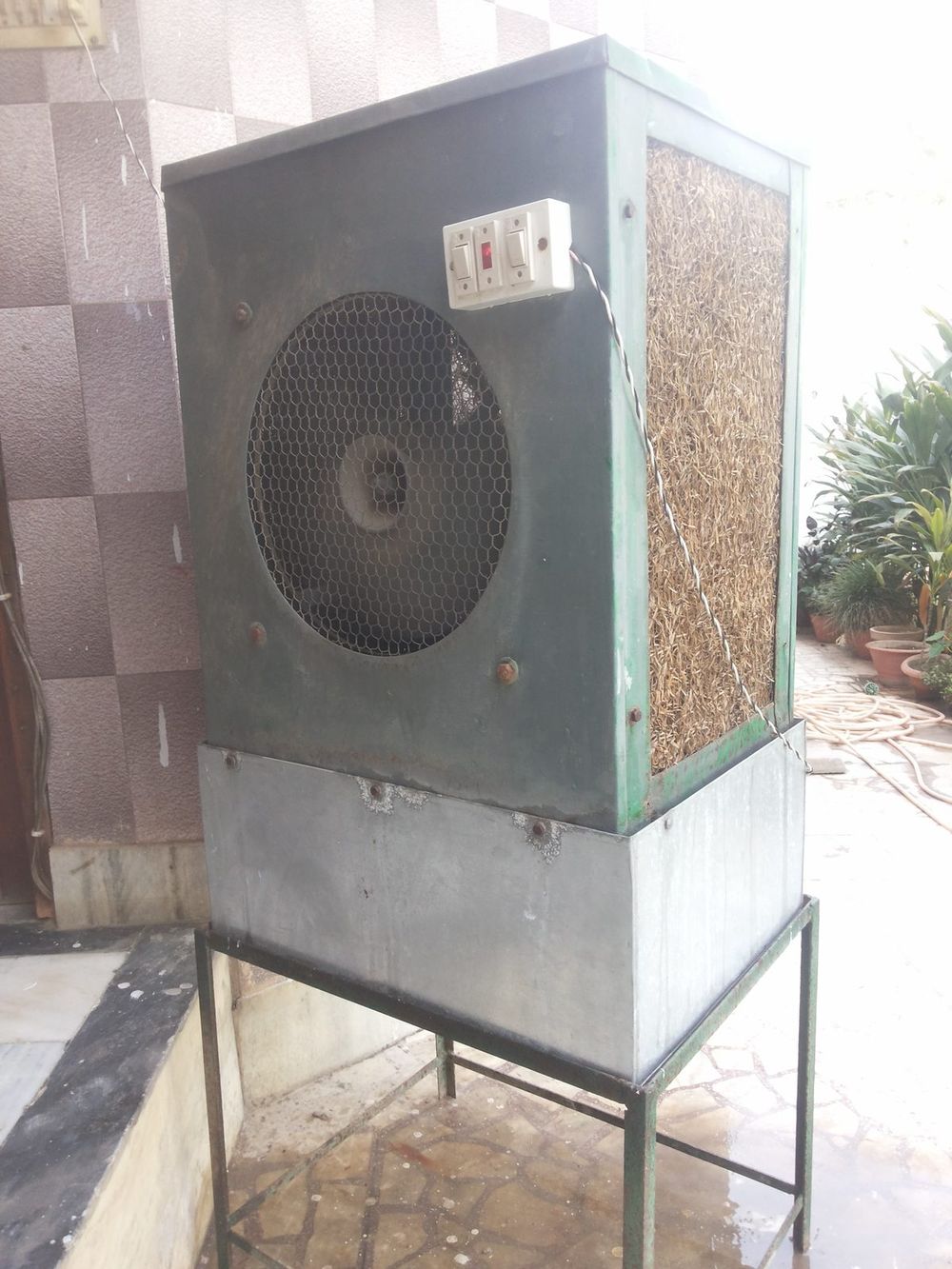
Is there a way to take the edge off a hot, dry afternoon without installing an air conditioner or paying to run one all day? For many people the answer is an evaporative air cooler. The Sunpentown SF610 is an air cooler that cools room air by evaporating water, and this guide covers how that works, how to place the unit, how to keep it running well, and how to tell whether it is the right tool for your room and your climate.
How an air cooler works
An air cooler works on a simple idea: water absorbs heat when it evaporates. Inside the unit, a small pump lifts water from the tank and soaks a set of pads. A fan pulls warm room air through those wet pads, some of the water evaporates into the air, and the air that comes out the front is cooler and more humid than the air that went in. There is no compressor, no refrigerant, and no hose to run out a window. The whole machine is a fan, a pump, a tank, and a set of pads.
The SF610 is built to be portable. It stands on the floor, plugs into a standard household outlet, and can be rolled from one room to another as needed. Fill the tank, switch it on, and the unit starts moving cooled air into the room within minutes. Because the cooler adds moisture to the air, it works well when the room has some ventilation, such as a window or door cracked open, so the moist air has somewhere to go and fresh dry air can keep flowing in.
Dry air, humid air, and what to expect
The cooling an evaporative cooler delivers depends on how dry the air is. Dry air can absorb a lot of water vapor, so a lot of evaporation happens and the air cools noticeably. Humid air is already close to full of water vapor, so little evaporation happens and the air barely cools. That is the single most important thing to understand about a cooler: it is a dry-climate machine, and its performance follows the humidity of the day.
On a hot, dry afternoon the air coming out of the cooler can feel much cooler than the room, and the added moisture can make dry air feel more comfortable on skin and sinuses. On a muggy day the same cooler may drop the temperature only slightly while making the room feel damper, which most people find less comfortable rather than more. Before you count on a cooler, check the typical summer humidity where you live. In arid regions it is a practical everyday tool. In humid regions it is the wrong tool, and a fan or an air conditioner will serve the room better.
Placing the cooler in the room
Placement decides how much of the cooling actually reaches you. Put the unit where people sit, point the outlet toward them, and keep the path of the air clear of furniture and curtains. A cooler works as a spot cooler: the air right in front of it feels cool, and the effect fades with distance. Sitting a few feet in front of the unit on a hot afternoon feels very different from sitting across a large room with the cooler in the far corner.
Put the unit on a level floor near a source of fresh air, such as an open window or door, and leave a gap behind it so the fan can pull air in freely. Do not push it tight against a wall or a curtain, since blocked intake cuts the airflow and the cooling with it. Crack a window or a door on the far side of the room so air can flow through the space: dry air enters, passes over the wet pads, and the moist air leaves. If the room starts to feel sticky, open the window wider. A cooler in a sealed room just recycles the same air and makes it more humid without cooling it much.
Filling the tank and running the unit
Fill the tank with clean water up to the marked fill line, and do not overfill it. Let the pads soak for a few minutes before turning the fan up, so the air passes over fully wet pads from the start. Run the fan on the speed that fits the moment: high speed moves more air and cools faster, low speed is quieter and suits sleeping or reading. Refill the tank before it runs dry, since a dry pump can wear out quickly, and check the level before leaving the unit running overnight.
Some coolers have an ice compartment, and adding ice or cold water can give the air an extra chill for a while, though the effect fades as the ice melts. The product literature for the unit lists whether it includes that feature. Do not add anything but clean water to the tank unless the instructions say otherwise, since additives can damage the pump or leave deposits on the pads. When the cooler will sit unused for a while, empty the tank completely so the water does not go stale.
Cleaning and routine upkeep
A cooler only needs a little regular attention, and most trouble comes from skipping the simple steps. Rinse the tank often and wipe it out so stale water and mineral deposits never get a foothold. Clean or swap the pads on the schedule in the product literature, since pads caked with minerals cool less and can smell musty. Where the tap water is very hard, filtered water slows the buildup and keeps the pads working longer.
When the hot season ends, empty the tank, clean the pads, wipe the cabinet, and let everything dry before the unit goes into storage. Keep it in a dry place with the tank empty so nothing grows inside over the winter. In spring, fill the tank, run the unit for a while, and confirm the pump lifts water to the pads and the fan runs smoothly before the first hot week arrives. A musty smell points to pads or a tank that need cleaning, and a pump that runs while the pads stay dry usually means the pump or the water line is clogged.
When a cooler is the right choice
A cooler is the right choice when the climate is dry, the space is a single room or a spot where people sit, and the budget favors a simple portable machine over an installed system. It suits a bedroom, a home office, a workshop, or a garage in an arid region, and it suits rented rooms and spaces where a window unit is not allowed or not practical. It also suits covered outdoor spaces, like a patio or a workshop with the doors open, where an air conditioner would waste its cooling on the open air.
It is the wrong choice for a humid climate, for a whole house, or for a large open space that needs even cooling in every corner. It cannot dehumidify, so a room that is already damp will only get damper. It cannot match an air conditioner on a very hot day, and it cannot cool a sealed room well, since it needs fresh dry air flowing through. Match the cooler to the climate and the room, and it does a useful job for very little running cost. Expect it to do a job it was not built for, and it will disappoint.
Buying checklist
Start with the climate, the room, and the unit itself. Dry summers argue for a cooler, humid summers argue against one. A single room or a seating area suits a cooler, while a whole house calls for a larger system. On the unit, look for a tank that is easy to fill and empty, pads that are easy to reach and clean, controls that are simple to use, and wheels that roll smoothly when you move it between rooms.
Look over the warranty terms and file the model number and purchase date with your records. When something goes wrong it is usually a small thing: a pump that has worn out, a pad that is clogged, or a tank that drips. Clean it often, fill it on time, and give it fresh air, and it will serve through the hot, dry months. When the room stays sticky or the air barely cools, the fix is usually more ventilation or a different kind of cooling, not a larger cooler.