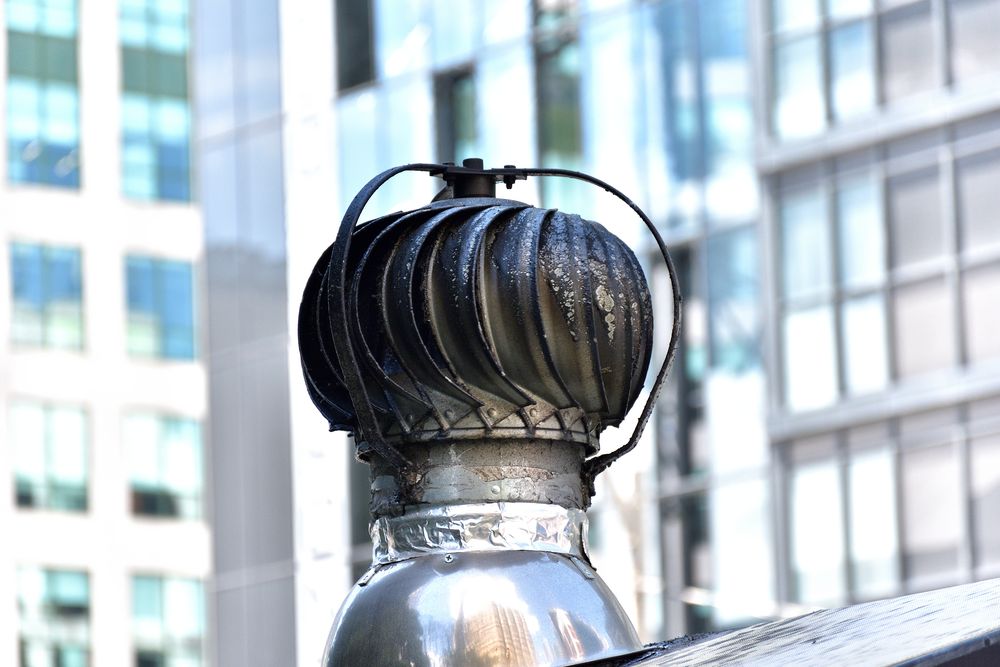
Is your attic hot, stuffy, and full of stale air even when the rest of the house feels fine? A roof turbine vent, sometimes called a whirlybird, is one of the oldest and simplest answers to that problem. It sits on the roof, spins in the wind, and pulls warm air out of the attic without using any electricity at all. This guide looks at one specific type: the 12-inch weathered bronze aluminum externally braced wind turbine. If you are trying to decide whether this kind of vent fits your roof, how it works, and what to watch for during installation and upkeep, the sections below walk through it step by step.
A wind turbine vent is a passive ventilation device. It has a round, finned head that turns on a vertical shaft, mounted on a base that flashes into the roof. When wind blows across the head, the fins catch it and spin. That spinning motion creates a light suction that draws air up out of the attic through the vent throat and out between the fins. On a calm day the head turns slowly or not at all, but warm air still rises through it by natural convection, the same way heat escapes through any open roof vent. The turbine does not cool the rooms below directly. It cools the attic, and a cooler attic means less heat pressing down through the ceiling into the living space.
What the name tells you about this turbine
Every part of the product name describes something you can check before you buy. The 12-inch figure is the diameter of the turbine throat, the opening that connects the vent to the attic. A 12-inch turbine is a common residential size, suited to the roof of an ordinary single-family home. Larger roofs, or roofs with long attic runs, often need more than one turbine spaced along the ridge line, and a contractor can help you work out how many your attic needs.
Weathered bronze is the finish color. It is a dark, warm brown tone that blends with brown, bronze, and dark gray roofing, and it tends to look at home on roofs with earth-toned shingles or metal panels. The color is a finish applied to the metal, so it will age with sun exposure like any painted or coated roof accessory. Aluminum is the material of the head and body. Aluminum is light, so the head spins freely, and it does not rust the way bare steel does. That matters on a roof, where the vent sits in rain, sun, and temperature swings year-round.
Externally braced describes how the spinning head is supported. On an externally braced turbine, the support arms sit outside the head, holding the top of the unit steady while it turns. The other common style is internally braced, where the supports sit inside the head. Both styles do the same job. The practical difference is mostly about appearance and about how the head behaves in strong wind: external bracing is visible from the ground, and some roofers prefer it because the bracing is easy to inspect from outside without taking the head apart.
How a turbine vent moves attic air
Attic ventilation works as a system, not as a single device. Hot air needs a way in at the bottom and a way out at the top. The turbine is the way out. Air enters through intake vents, usually in the soffits under the eaves, travels up along the underside of the roof deck, picks up heat, and leaves through the turbine. If the intake vents are blocked by insulation, paint, or debris, the turbine cannot pull much air no matter how fast it spins. Before adding a turbine, check that the soffit vents are open and clear.
Wind is the turbine's engine. A steady breeze spins the head and increases the draw. In a strong wind the head spins fast and moves a good volume of air. In still air the turbine still works as a static vent, because warm air rises and escapes through the gaps in the head. This is why turbines are often described as working around the clock: they never need to be switched on, and they keep venting on calm nights when the attic is still warm from the day.
One thing a turbine cannot do is replace mechanical cooling. It will not bring attic temperatures down to outdoor temperatures on a hot afternoon, and it will not fix a room that is hot because of poor insulation or leaky ductwork. Think of it as one part of a ventilation and insulation package. Used alongside clear intake vents and adequate ceiling insulation, it helps the attic stay closer to outdoor temperature and helps moisture escape.
Where a turbine vent fits, and where it does not
A turbine vent fits a pitched roof with an accessible attic and working intake vents. It is a common sight on shingle and metal roofs, and it works on most standard roof pitches. It is less useful on a flat roof, where there is no tall attic space for air to rise through, and on a roof with no intake vents, where the turbine would have little air to draw. If your attic has a powered fan already, ask a roofer whether adding a turbine helps or whether the two would fight each other: a powered fan can pull air backward through a passive turbine, which wastes the fan's effort.
Roof turbines are also used on sheds, garages, and workshops, where the goal is the same: let hot air out and keep the space from turning into an oven. On a small outbuilding, one 12-inch turbine is often enough. On a house, the count depends on the attic size and the layout. A long, low attic may need two turbines, one near each end, so air moves evenly instead of pooling in a far corner.
Consider the look of the roof, too. A turbine is visible from the street. The weathered bronze finish is chosen to blend in, but the head still reads as a round, spinning shape on the roofline. Some homeowners like that look and some do not. If appearance matters to you, look at photos of installed turbines on roofs like yours, or ask a roofer to point out a nearby house with one.
Choosing the right turbine for your roof
Start with the roof material and pitch. The base of the turbine must sit flat on the roof and be flashed so water runs around it, not under it. Most turbines come with a base that adapts to common pitches, but a very steep roof or an unusual material, such as tile or slate, may need a special flashing or a different vent type. Ask the supplier or your roofer whether the base suits your roof before you order.
Next, check the throat size against the opening you plan to cut. A 12-inch turbine needs a 12-inch round hole through the roof deck. That hole must be cut clear of rafters and framing, so the location on the roof matters as much as the size. A roofer will pick a spot between rafters, usually near the ridge where warm air collects, and away from valleys where water runs.
Look at the finish and material with your climate in mind. Aluminum holds up well in most climates because it does not rust. In a coastal area with salt air, ask whether the finish is rated for that exposure, and rinse the head now and then if the maker recommends it. Check that the bearings are sealed or shielded, since the head spins on a bearing that sits out in the weather. A turbine that squeaks or wobbles after a few years usually needs a bearing service or a replacement head.
Installation notes for homeowners
Installing a turbine means cutting a hole in the roof, so most homeowners hire a roofer for this job. If you are hiring one, these are the points worth confirming before work starts. First, the location: near the ridge, between rafters, with clear airflow from the soffit vents below. Second, the flashing: the base should sit under the shingles above it and over the shingles below it, so rain runs down and away. Third, the seal: the joint between the base and the roof deck should be sealed with roofing sealant rated for outdoor use, and the flashing should be nailed in a way that does not leave exposed fasteners in the path of running water.
After installation, the head should spin freely by hand and sit level. A head that leans will wear its bearing unevenly and may start to wobble. The turbine should also sit clear of anything that blocks the wind, such as a taller chimney or a neighboring roof section. A turbine tucked into a wind shadow will spin less and move less air.
Do not walk on the roof to check the turbine unless you are comfortable and equipped to do so. From the ground, you can watch whether the head spins on a breezy day, which tells you the bearing is free. From inside the attic, you can check for daylight or water stains around the base after rain, which would point to a flashing problem worth a roofer's visit.
Maintenance and common problems
A turbine vent needs little maintenance, but it is not maintenance-free. Once a year, look at the head from the ground and listen on a windy day. A steady hum or a rhythmic squeak often means the bearing needs attention. Some turbines have bearings that can be oiled; others use sealed bearings that are replaced as a unit. Follow the maker's guidance for your model, and if the head has stopped spinning entirely, have it checked: a seized turbine still vents by convection, but it moves less air than a spinning one.
Check the base flashing each year, too. Roof sealant ages, and a gap at the base can let water into the attic. Look for stains on the underside of the roof deck near the turbine, and for damp insulation below it. Catching a small leak early is a minor repair; catching it late can mean replacing insulation and deck boards.
In winter, a turbine can let warm, moist air out of the attic, which is helpful, but it can also be a path for snow to blow in during a storm with strong wind. If you notice snow dust inside the attic after a storm, it may have come through the turbine or another vent. This is usually a minor issue that melts and dries, but repeated snow entry is worth mentioning to a roofer, who may suggest a different vent arrangement for your climate.
Questions to ask your contractor
Before you commit, ask your roofer a few direct questions. How many turbines does my attic need, and where should they go? Are my soffit intake vents open and adequate, or do they need clearing first? Will the turbine base work with my roof material and pitch, and how will it be flashed? What is the plan if the head stops spinning in a few years: can the bearing be serviced, or does the head get replaced? And what is the warranty on the unit and on the installation work?
Also ask what the turbine will and will not do for your house. A good contractor will tell you plainly that a turbine helps attic ventilation but does not replace insulation, air sealing, or air conditioning. If someone promises that a single turbine will fix a hot second floor on its own, get a second opinion.
A 12-inch weathered bronze aluminum externally braced wind turbine is a simple, durable piece of roof hardware. It has no motor, no wiring, and no running cost. Chosen for the right roof, installed with sound flashing, and given a quick look once a year, it can keep an attic breathing for many years. The key is to treat it as part of a system: clear intakes below, a sound turbine above, and insulation and air sealing in between. Get those pieces working together, and the attic stays drier and cooler, which is good for the roof, the insulation, and the rooms underneath.