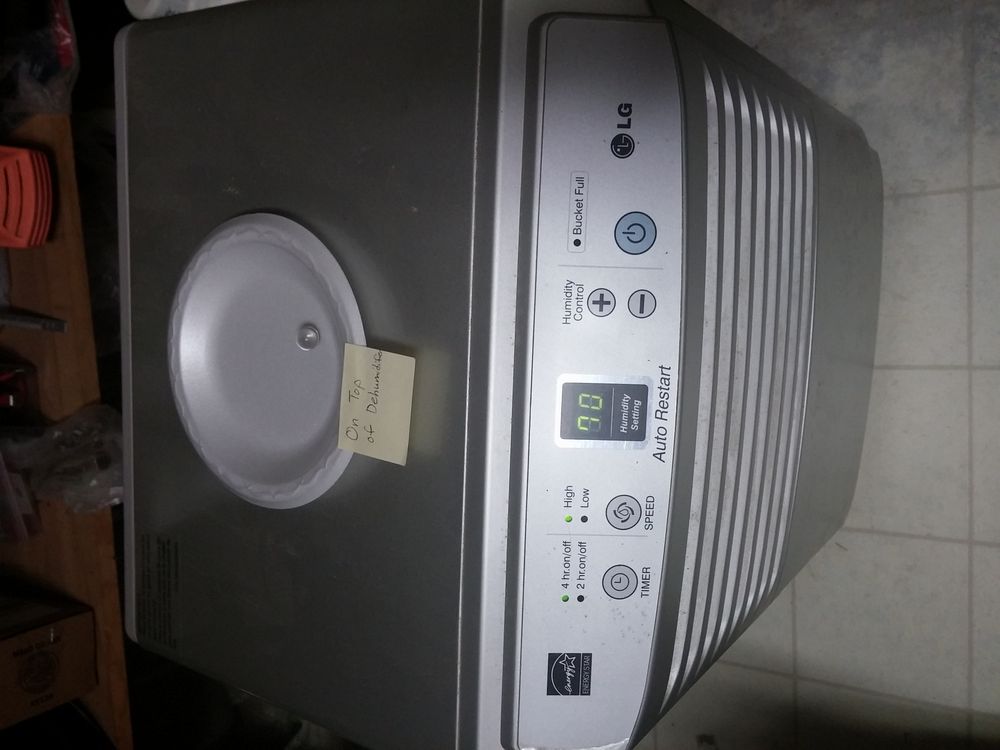
Does your basement smell musty no matter how often you clean it? Do tools rust in the garage, or does the paint peel in a damp laundry room? The cause is often the same: too much moisture in the air. A heavy-duty dehumidifier pulls that moisture out, and a high-capacity model is built for spaces where a small room unit would run all day and still fall behind. This guide looks at a 120-pint heavy-duty high-capacity dehumidifier with an Energy Star label: what that rating means, where this size of machine fits, and how to set it up and look after it.
A dehumidifier is a machine that draws in damp air, cools it so the water vapor condenses into liquid, collects that water, and blows the drier air back into the room. Most home models use a refrigeration cycle, the same basic idea as a small air conditioner, with a cold coil that wrings moisture from the air. Some heavy-duty models use a different method, but the result is the same: drier air and a bucket, or a drain hose, full of water that used to be floating around your house.
What 120 pints means
Dehumidifiers are rated by how many pints of water they can remove from the air in a day under test conditions. A 120-pint rating is at the large end of the residential range. It means the machine is designed to handle a lot of moisture in a large space, such as a full basement, a large crawl space, or a workshop where damp air comes in faster than a smaller unit could remove it.
The pint rating is a guide to capacity, not a promise about your room. How much water a dehumidifier actually removes depends on how damp the air is, how warm the room is, and how much new damp air leaks in. A machine rated at 120 pints will remove more water in a wet basement than in a mildly damp bedroom, because there is more moisture available to collect. In a very dry room it will collect little, because there is little to collect. Use the rating to compare machines with each other, not as a guarantee of a specific result in your home.
Heavy duty is a description of the build, not a technical term. On a machine like this it usually means a stronger compressor, a larger fan, a sturdier cabinet, and parts chosen to run for long hours in a demanding space. A heavy-duty unit is meant to be left running for weeks and months in a basement or crawl space, not just switched on for an afternoon. If you plan to run a dehumidifier all season, that build quality matters more than it would for occasional use in a bedroom.
What the Energy Star label means
Energy Star is a labeling program run by the U.S. government that marks products meeting certain efficiency criteria. A dehumidifier with the Energy Star label has been tested and found to use less energy than a standard model of similar capacity. For a machine that may run for many hours a day, that difference adds up over a season.
The label does not tell you how well the machine dehumidifies. It tells you about energy use relative to other machines. A cheap, inefficient unit and an efficient one may both remove the same amount of water, but the efficient one does it with less electricity. When you compare two large dehumidifiers, the Energy Star label is a useful tiebreaker: pick the efficient one if the capacity and features are otherwise similar.
Energy use also depends on how you run the machine. A dehumidifier that runs nonstop because the room is very damp will use more power than one that cycles on and off in a room that is already fairly dry. Setting the machine to a sensible target and letting it cycle, rather than running it at full power around the clock, keeps the running cost down.
Where a high-capacity dehumidifier fits
A 120-pint dehumidifier fits a large, damp space. The classic case is a basement that feels damp in summer, where the walls weep, the floor feels clammy, and stored cardboard goes soft. It also fits a crawl space with a dirt floor, a large laundry room, a workshop where tools rust, or a ground-floor room in a humid climate where the air never quite dries out.
It is more machine than a small bedroom or bathroom needs. In a small room, a large dehumidifier will cycle on and off quickly, which is noisy and hard on the compressor, and it will take up floor space that a smaller unit would not. Match the machine to the space. If you are unsure, measure the room and note how damp it feels: musty smell, condensation on cold surfaces, and damp patches on walls are all signs of a space that needs real capacity.
Before buying a dehumidifier, check where the water is coming from. A dehumidifier treats damp air, not a leak. If water comes in through a foundation crack, a failed gutter, or a plumbing leak, fix the source first. A dehumidifier can keep up with damp air and normal seepage, but it cannot outrun a steady leak, and running it against one wastes electricity while the underlying problem gets worse.
Setting up a large dehumidifier
Place the machine where air can flow around it. A dehumidifier needs clear space in front of its intake and outlet, usually at least a foot on all sides, so it can draw in room air and blow out dry air without short-circuiting. Do not push it into a corner or behind stored boxes. Put it near the dampest part of the room, often near an exterior wall, and keep it level so the collected water drains correctly inside the machine.
Think about drainage before you start the machine. A 120-pint unit fills a bucket fast in a wet basement, and emptying a heavy bucket twice a day gets old quickly. Most large dehumidifiers have a drain hose connection that lets the water run by gravity to a floor drain, a sump pit, or a sink. If the drain is higher than the machine, or there is no floor drain, some models can use a small pump to push the water up and out. Check what your model supports, and plan the hose route so it runs downhill with no kinks or low spots where water can sit.
Plug the machine into a grounded outlet on its own circuit if possible. A large dehumidifier draws a real load when the compressor starts, and sharing a circuit with other heavy appliances can trip a breaker. Do not use a long extension cord, and never run the cord under a rug or through standing water. If the only outlet is far from a good spot for the machine, have an electrician add an outlet rather than improvising.
Running it day to day
Most dehumidifiers let you set a target humidity level on a dial or a digital control. Set it, let the machine run, and give it a day or two to bring the room down. A basement that has been damp for months holds moisture in the walls, the floor, and everything stored there, so the first few days will be the hardest work. The bucket will fill fast at first and then slow down as the room dries out. That is normal.
Do not chase the driest possible setting. Air that is too dry is uncomfortable and can dry out woodwork, and the machine will run constantly trying to reach a target the room cannot hold. A moderate setting that keeps the room feeling dry and smelling fresh is the goal. If the machine runs all day and the room still feels damp, the problem may be the size of the space, a source of water you have not found, or air leaking in faster than the machine can dry it.
Keep doors and windows closed while the machine runs. Every open window lets in a fresh supply of humid air, and the machine will spend its energy drying the outdoors. In a basement, close the windows and any vents that bring in outside air during humid weather, and let the dehumidifier do its job in a closed space.
Maintenance that keeps it working
The main maintenance job is the air filter. Most dehumidifiers have a washable filter over the air intake that catches dust before it reaches the coils. In a dusty basement or workshop, check it monthly. Rinse it, let it dry fully, and put it back. A clogged filter makes the machine work harder, move less air, and remove less water, and over time it can strain the fan motor.
Clean the bucket and the drain hose now and then. Standing water grows slime and smell, and a slimy hose can clog. If the machine has a drain hose, check that water flows freely through it, and flush it if the flow slows. Wipe down the outside of the cabinet, and check the power cord for damage, especially in a basement where the cord may sit on a damp floor.
Once a year, look at the coils if you can reach them safely with the machine unplugged. Dust on the coils acts like insulation and makes the machine less effective. A soft brush and a gentle vacuum can clear light dust. Do not bend the thin fins on the coils, and do not spray water into the machine. If the coils are iced up, switch the machine off and let the ice melt: running a frozen machine can damage the compressor. Most large models have a defrost cycle that handles light frost on its own.
When to call a professional
Call a contractor or a basement specialist if the dampness does not improve after a week of steady running, if water appears in places it did not before, or if you find mold growing on walls or framing. A dehumidifier manages moisture in the air; it does not fix grading that slopes toward the house, gutters that dump water at the foundation, or a sump pump that has failed. A professional can trace the water to its source and fix the cause, after which the dehumidifier has a much easier job.
Also call for help if the machine itself misbehaves: if it trips breakers, smells of burning, leaks water onto the floor, or makes loud grinding noises. Unplug it and do not keep running it. A large dehumidifier is a real appliance with a compressor and a fan, and a fault in either is a job for a technician, not a home repair.
A 120-pint heavy-duty dehumidifier is a workhorse for a large damp space. It will not fix a leak, and it will not dry a house with the windows open, but set up with clear airflow, proper drainage, and a sensible target, it can turn a musty basement into a dry, usable room. The Energy Star label helps keep the running cost down over a long season. Give it a clean filter, a clear drain, and a closed room, and it will do the quiet work of pulling water out of the air, pint after pint, day after day.