Which air conditioner fits your home: the one that cools every room through ducts, the quiet box on the bedroom wall, or the unit that slides into a window? Home air conditioner systems come in several types, and each one suits a different house, budget, and climate. This guide walks through the main types, how they work, how to size them, and what to check before you buy, so you can pick a system that fits the way you actually live.
Central Air Conditioning
Central air is the default in many homes with ductwork. One outdoor unit and one indoor coil serve the whole house, with a blower pushing cool air through ducts to each room and a thermostat controlling the whole system from one spot. It is the neatest option when the ducts are already in place, because there is nothing to see in the rooms except a register and a thermostat.
Central air suits a home with sound ducts and fairly even rooms. If the ducts leak, run through a hot attic without insulation, or serve rooms with very different sun exposure, comfort will suffer no matter how good the outdoor unit is. Before you invest in a new central system, have the ducts checked for leaks and damage. Sealing and insulating them is often the cheapest comfort upgrade a home can get.
A central system also removes humidity as it cools, which matters in sticky climates. A system that is too large will cool the air fast and shut off before it has time to pull moisture out, leaving the house cool but clammy. Proper sizing, confirmed by a load calculation, avoids that trap.
Ductless Mini-Split Systems
A ductless mini-split pairs one outdoor unit with one or more indoor units mounted high on a wall or in the ceiling. Each indoor unit has its own remote or thermostat, so each room or zone can set its own temperature. There is no ductwork to leak or clean, and installation needs only a small hole in the wall for the lines that connect the indoor and outdoor parts.
Mini-splits suit homes without ducts, additions, converted garages, and rooms that are always too hot or too cold. They are quiet indoors, since the noisy compressor sits outside, and many models also heat, which makes them a strong choice for year-round comfort in mild climates. The indoor unit is visible on the wall, so placement matters: high on an interior wall, clear of furniture and curtains, with air able to flow across the room.
Multi-zone mini-splits serve several rooms from one outdoor unit, but the total capacity is shared. A contractor should check that the outdoor unit can handle all the indoor units running at once on the hottest day, and explain what happens when every zone calls for cooling together.
Window Air Conditioners
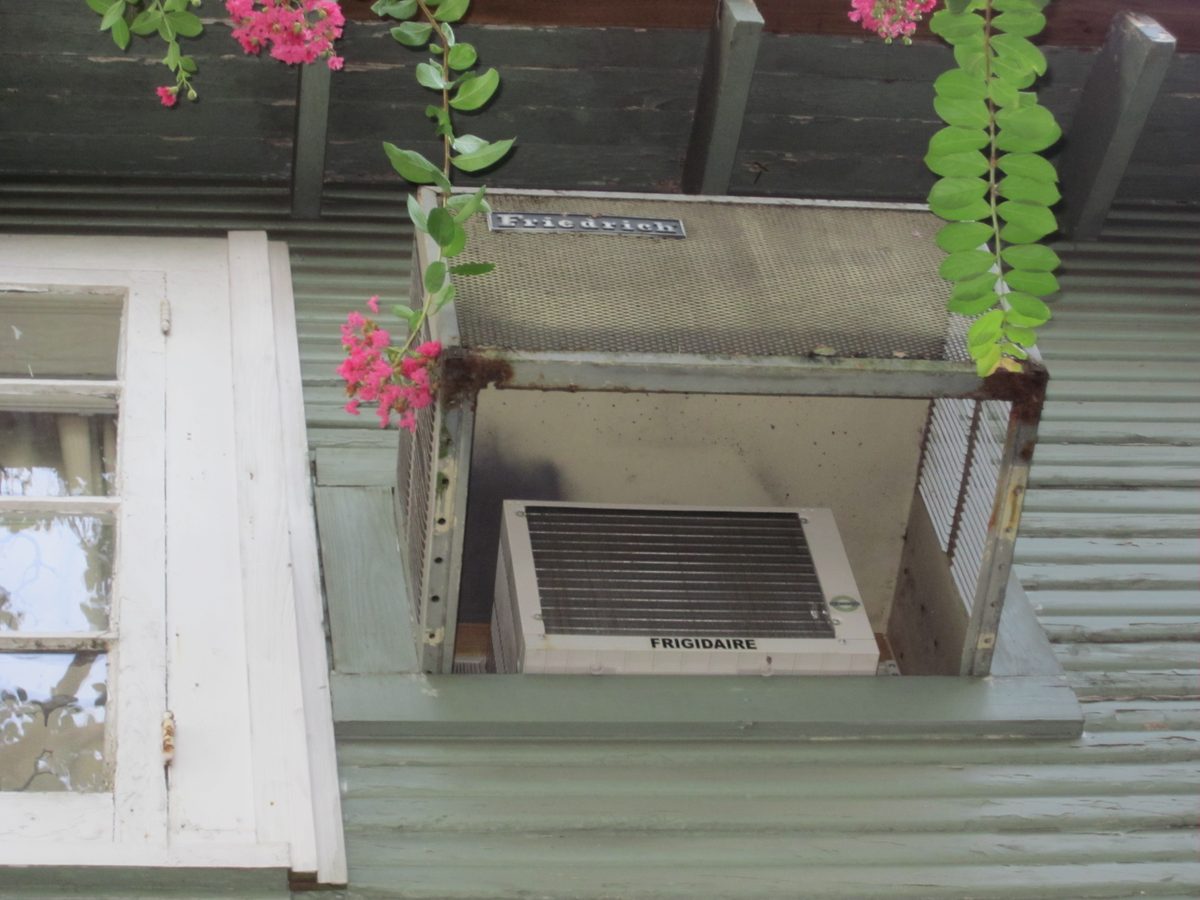
A window unit is a single box that sits in a window opening, with the cold side facing the room and the hot side facing outside. It cools one room, costs far less than a central system, and can be installed without a contractor in many homes. For a renter, a small apartment, or a single hot room, it is often the practical answer.
Window units need a window that fits the unit and a bracket that holds its weight safely. Seal the gaps around the unit so hot air does not leak back in, and tilt it slightly outward so condensation drains outside rather than onto the sill. Clean the filter regularly, since a small unit with a dirty filter cools poorly and can freeze up. At the end of the season, remove the unit or cover it, so cold air does not leak through it all winter.
Portable Air Conditioners
A portable unit rolls on wheels and vents hot air outside through a hose in a window. It cools one room and can move from room to room, which suits renters and people who need cooling in only one space at a time. A single-hose model pulls room air to cool its own hot parts, which can draw warm air in from the rest of the house, while a dual-hose model avoids that problem and usually cools better.
Portable units are louder than other types because the compressor sits in the room with you, and the hose takes up window space. Empty the condensate tank or set up the drain hose as the manual directs, and keep the hose as short and straight as you can so hot air does not leak back into the room. A portable unit is a good short-term or single-room answer, not a replacement for a whole-house system.
How to Size a Home System
Every type needs the right size. Too small and the unit runs all day without catching up. Too large and it short cycles, leaving humidity behind and wearing out faster. As a general guide, cooling capacity relates to the size of the space, and many sizing guides start from the floor area and then adjust for ceiling height, insulation, windows, shade, and how many people use the room. A sunny room with big windows needs more capacity than a shaded room of the same size.
For a central or ductless system, ask the contractor for a room-by-room load calculation rather than a guess from floor area alone. For a window or portable unit, check the size range the maker lists for the unit and measure your room honestly, including any open doorways to adjoining spaces. A unit rated for a closed bedroom will struggle with an open-plan living area.
Heating, Humidity, and Air Quality
Many home cooling systems also heat. A heat pump version of a mini-split or central system can warm the house in mild weather, and a dual-fuel setup pairs a heat pump with a furnace for colder days. If your winters are mild, a system that heats and cools in one box can replace two pieces of equipment. In a cold climate, check how the system performs on the coldest nights before you count on it alone.
Humidity control deserves attention in any home system. Cooling removes moisture, but only while the system runs. A system that is oversized or set to a very low temperature will not dehumidify well. In damp climates, a dedicated dehumidifier or a system with a dry mode can help, and so can simple steps such as venting dryers outside and fixing plumbing leaks.
Installation and Running Costs
Installation quality matters as much as the equipment. A central system needs sound ducts, a level outdoor pad, insulated lines, and a proper drain. A mini-split needs the indoor unit level, the lines sealed where they pass through the wall, and the outdoor unit clear of plants and snow. A window unit needs a secure fit and sealed gaps. In every case, ask the installer to test the system and show you the readings.
Running costs depend on the efficiency rating, the size of the space, the climate, and how you use the thermostat. A higher efficiency rating uses less electricity for the same cooling, and the saving grows with the hours the system runs. Compare the purchase price and the expected yearly running cost together, not the purchase price alone. Small habits help too: shade the windows in the afternoon, keep filters clean, and set the thermostat a degree or two higher than you think you need, then adjust down only if the house still feels warm.
Maintenance Basics for Every Type
Every home system shares the same basic care. Clean or change the filter on schedule. Keep the outdoor unit clear of leaves, grass, and clutter, and hose the coil fins gently if they collect dirt. Keep the drain clear and watch for water where it should not be. Book a professional service once a year for central and ductless systems, before the cooling season starts.
Listen to the system. A new rattle, a hum that was not there before, ice on the lines, or a bill that jumps without a change in weather are all reasons to call a technician. Small faults are cheap when they are caught early and costly when they are left to grow. Keep the manual, the model and serial numbers, and the service records in one place so any technician can pick up where the last one left off.
Choosing the Right System for Your Home
Start with the house you have. If it has good ducts, central air is the natural choice. If it has no ducts, a mini-split usually beats adding them. If you need one room cooled, a window or portable unit may be all you need. Match the system to the rooms, the climate, and the budget, and get a second opinion before you commit to a large purchase. The right home air conditioner is the one that keeps your rooms steady, your air dry enough to feel comfortable, and your bills predictable through the summer.