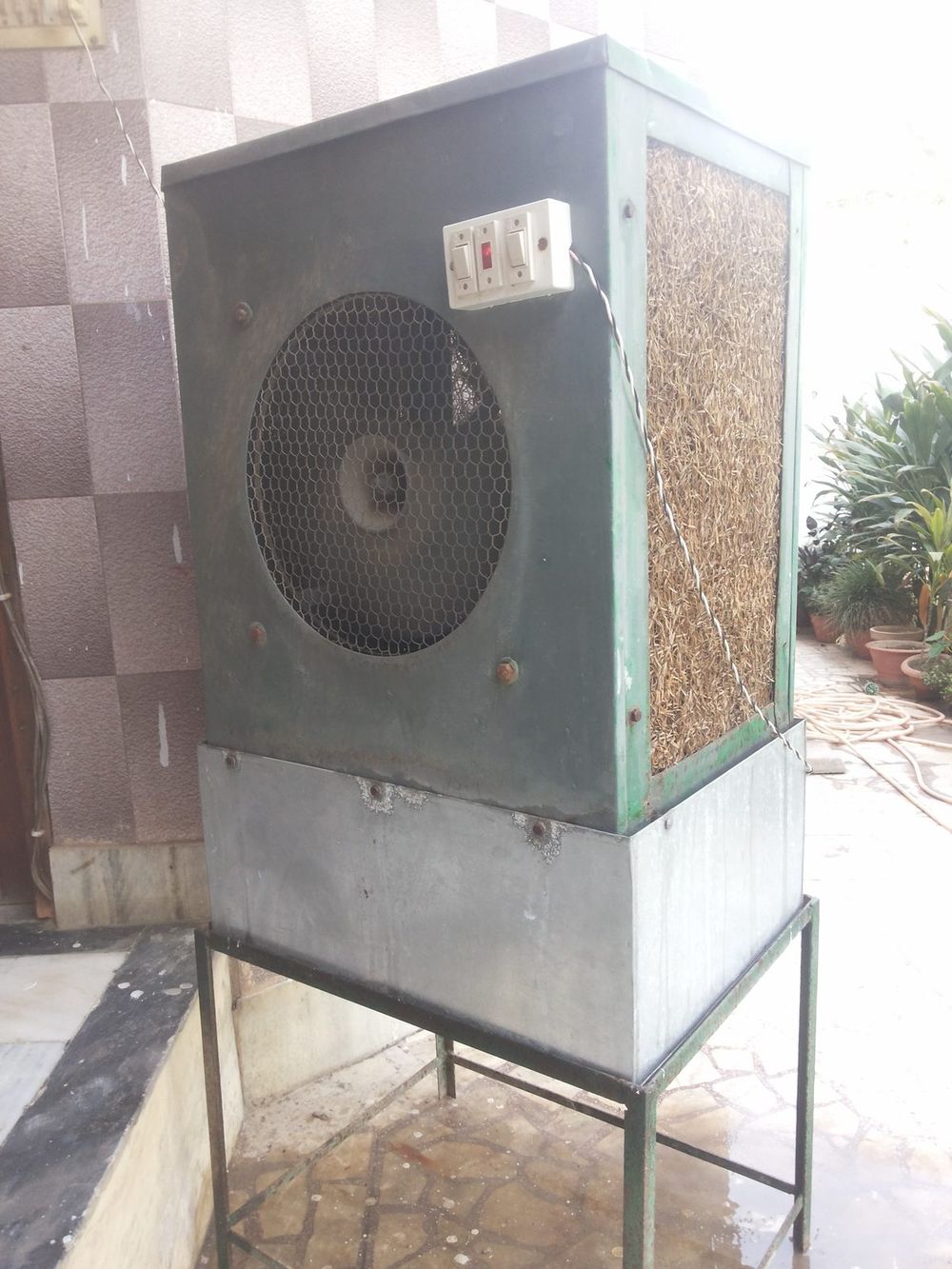
What if you could cool a room with water and a fan instead of a compressor? That is what an evaporative air cooler does. It pulls warm, dry air through pads soaked with water, and the water absorbs heat as it evaporates, so the air that comes out the other side is cooler and a little more humid. If you live in a dry climate, this simple idea can make a real difference. This guide explains how evaporative coolers work, where they make sense, where they do not, and how to use one well.
How an Evaporative Cooler Works
An evaporative cooler, sometimes called a swamp cooler, has a simple layout. A pump lifts water from a tank or a supply line onto absorbent pads. A fan draws outside air through the wet pads, the water evaporates into the air stream, and the cooled air blows into the room. The same physics cools your skin when sweat evaporates on a hot day, and the cooler uses it at a larger scale.
Evaporation needs dry air to work. Dry air can absorb a lot of water, so a lot of heat leaves with it. Humid air is already full of moisture, so it absorbs little, and the cooling effect drops sharply. That is why the climate matters more for an evaporative cooler than for any other cooling product. A cooler that works well in a desert may do almost nothing in a humid coastal city.
There are two broad types. A whole-house cooler mounts on the roof or in a window and pushes cooled air through the house, usually through ducts or a central vent. A portable cooler is a box on wheels that cools one room, with a tank you fill by hand. Both use the same principle, and both need the same thing to work: dry air outside and a way for air to flow through the house.
Where Evaporative Coolers Make Sense
A hot, dry climate is the natural setting for an evaporative cooler. Think of desert regions and high plains where summer afternoons are hot and the air holds little moisture. In that setting a cooler can drop the indoor temperature by a useful margin while using far less electricity than a compressor-based air conditioner, since its main energy use is a fan and a small pump.
They also suit spaces that are open to the outside. A workshop, a garage, a patio, or a barn with open doors is a natural fit, because these coolers need airflow rather than a sealed room. A home with windows that can open on opposite sides of the house can use a whole-house cooler well, with cool air entering on one side and warm air leaving on the other.
Cost is part of the appeal. A portable cooler costs far less than a central system, and a whole-house cooler costs less to install than a compressor system of the same size. Running costs are low as well, which is why they remain popular in dry regions even where compressor cooling is available.
Where They Do Not Work Well
Humidity is the hard limit. When the air outside is already damp, an evaporative cooler adds moisture without removing much heat, and the room can end up feeling sticky rather than cool. In a humid climate, a compressor-based air conditioner is the right tool, because it removes moisture as it cools. A cooler will not fix a humid house, and it can make the dampness worse.
They also struggle in a sealed house. A cooler needs a path for air to leave, or the house fills with humid air and the cooling stops. If you run a portable cooler in a closed room with no window open, the room will get more humid and the temperature will barely move. Open a window or a door on the far side of the room so air can flow through.
Water use is a real cost to count. A cooler evaporates water all day, and in a dry region that water has to come from somewhere. A whole-house unit on a supply line uses water steadily through the season, and a portable unit needs its tank refilled often. If water is scarce or costly where you live, weigh that against the electricity you save.
Choosing the Right Size and Type
Size an evaporative cooler by the space and the airflow it can move. Makers list an airflow rating for each model, and a larger space needs a larger rating. As a general guide, a portable unit suits a single room, while a whole-house unit suits a home with open windows and a clear path for air to flow. A unit that is too small for the space will run all day without catching up, and a unit that is too large will waste water and power.
For a portable cooler, check the tank size and how easy it is to fill and clean. A small tank needs frequent refills on a hot day. Check the fan speeds and whether the unit has a setting that runs the fan without the pump, for days when you want air movement without extra humidity. For a whole-house unit, check the roof or window mounting, the water supply connection, and the drain, and make sure a contractor installs it so it seals against weather.
Look at the pads as well. Pads come in different materials, and they wear out over time. Ask how long the pads in the model you are considering last, how much replacements cost, and how hard they are to change. A cooler with pads that are easy to reach and replace is a cooler that will actually get maintained.
Setting Up and Using a Cooler Well
Setup decides most of the result. Place a portable cooler near an open window or door so it draws in fresh outside air, and open a window on the far side of the room so air can flow out. Keep the cooler a short distance from the wall so it can draw air freely, and aim the vent across the room rather than at a wall. On a very hot day, start the cooler before the house heats up rather than waiting until the rooms are already warm.
Fill the tank with clean water and keep the water level where the maker directs. A pump that runs dry will wear out fast, and a tank left full of stale water will grow odors. Run the pump for a few minutes before you expect to need cooling, so the pads are wet through when the fan starts. On a mild day, running the fan alone can be enough, and it saves water.
For a whole-house cooler, open windows in the rooms you want to cool and close the ones you do not, so the cooled air goes where it is needed. A small gap in each open window is enough; you do not need to throw them wide. If one room stays warm, open its window a little more rather than turning the fan higher.
Maintenance That Keeps It Working
Regular care is simple and it matters. Clean the tank and the pads as the maker directs, and change the pads when they wear thin or start to smell. A pad coated in mineral scale from hard water will not wet evenly and will cool poorly, so clean the scale off or replace the pad. Drain the tank and the lines before winter so standing water does not freeze and crack the parts.
Check the pump and the float valve each spring before the cooling season starts. A stuck float can flood the unit or starve the pump, and a worn pump will not lift water to the top of the pads. Oil the fan motor if the manual calls for it, and check the belt on a whole-house unit for cracks and tension. A yearly check before summer saves a breakdown on the first hot weekend.
What to Ask Before You Buy
Ask about your climate first, not the product. A local contractor or a neighbor who uses a cooler can tell you whether evaporative cooling works where you live. Ask about water use, pad life, and the cost of replacement parts. Ask where the unit will sit and how the air will flow through the house. A cooler that fits the climate and the house is a simple, low-cost way to stay comfortable, and a cooler that does not fit either will only add humidity and disappointment.